This blog is for everyone who uses words.

The ordinary-sized words are for everyone, but the big ones are especially for children.


Sunday, 7 July 2013

Sunday Rest. Word Not To Use Today: charidee.

On the whole my principle with words is the more the merrier.

I'd happily make an exception in this case, though.

Charidee is an amusing (and I use the word here quite quite wrongly) mis-spelling of charity.

It's supposed to mimic the Mid-Atlantic* pronunciation of someone trying to say charity, and it makes fun of people who give money as publicly as possible.

Charity is a fine and noble thing, and I couldn't care less if people show off how rich they are as long as they put money in the pot.

As far as I can see, the sneering word charidee helps absolutely no one at all.

And I, for one, am going to disown it.

Word Not To Use Today: charidee. How this word got into a respectable dictionary I do not know - but then I suppose  lexicographers can't afford to be tasteful. The proper word, charity, which comes from the Old French charite, from the Latin cāritās, affection, from cārus dear.

*I wonder what the local accent is really like in mid-Atlantic? Anyone been to Ascension Island?


Saturday, 6 July 2013

The Adventures of Tom Sawyer by Mark Twain.

Look, you must already know that this book is brilliant, witty, human and humane.

If you haven't read it (and I understand there are such people) then here's a taster to show you what you've missed.

It's a beautiful day, but Tom Sawyer has been forced to stay at home and whitewash a fence. Tom's sorrows are many, for not only is he missing a day's freedom, but his friends will be certain to make fun of him. But then, being the irrepressible Tom, he has an idea, an inspiration, a stroke of supreme genius.

'Say - I'm going a-swimming, I am. Don't you wish you could? But of course you'd druther work - wouldn't you? Course you would!'
Tom contemplated the boy a bit, and said:
'What do you call work?'
'Why, ain't that work?'
Tom resumed the white washing, and answered carelessly:
'Well maybe it is, and maybe it ain't. All I know is, it suits Tom Sawyer.'
'Oh, come, now, you don't mean to let on you like it?'
The brush continued to move.
Like it? Well, I don't see why I oughtn't to like it. Does a boy get a chance to whitewash a fence every day?'
This put the thing in a new light.

                ******************************

«Метод Тома Сойера» - иногда...

Of course it does. And Tom ends up in profit to the tune of, amongst other things, two tadpoles, a small piece of chalk and a bit of a window sash.

Now that's what I call a real hero.


Word To Use Today: sawyer. A sawyer is someone who saws timber for a living. It comes from the word saw, of course, which in turn comes from the Old English sagu and is related to the lovely Old Norse word sog. Before that the Latin word secāre, which means to cut, probably has something to do with it.


Friday, 5 July 2013

Word To Use Today: nescience.

Nescience is such a nice, nestling sort of a word - one in which to hide comfortably away from all danger and challenges.

This is just what you'd expect, because nescience means ignorance.

Oh, but if only we looked outwards what great wide spaces of the unknown.

I, for instance, know almost nothing of card games, current chart music, elastance, the intrafascicular cambium, Serbo-Croat, Viking underwear (if any) and zugzwang.

(I'd like to know more about Viking underwear and Serbo-Croat, but the rest I'm afraid for now I'm content to do without.)

Plainly I can't ever know a billionth part of everything, so I'm going to have to embrace my nescience.

At least that means I shan't make the great mistake of forgetting the tiny island in the midst of the great ocean of the unknown on which I'm marooned.

File:DSC00031 French Polynésia Mooréa Island (8044046451).jpg
Photo Daniel Julie.

Word To Use Today: nescience. This word comes from the Latin nescentia, from ne, which means not, plus scīre, to know.


Thursday, 4 July 2013

There May Be Troubles Ahead: a rant.

I don't like to see people in trouble, but it's an ill wind that blows nobody any good.

Because now at last I understand.

I've been wondering for ages about the British Government's Troubled Families Unit.

The thing is, is it a Unit for Troubled Families, or is it a Unit for Families that has itself been going through some sort of a crisis?

Well, now I know.

The Troubled Families Unit has been having some difficulties recently and, yes, it's become a troubled Troubled Families Unit.

I can't say I'm surprised. They probably weren't all that sure whom they were supposed to be helping.


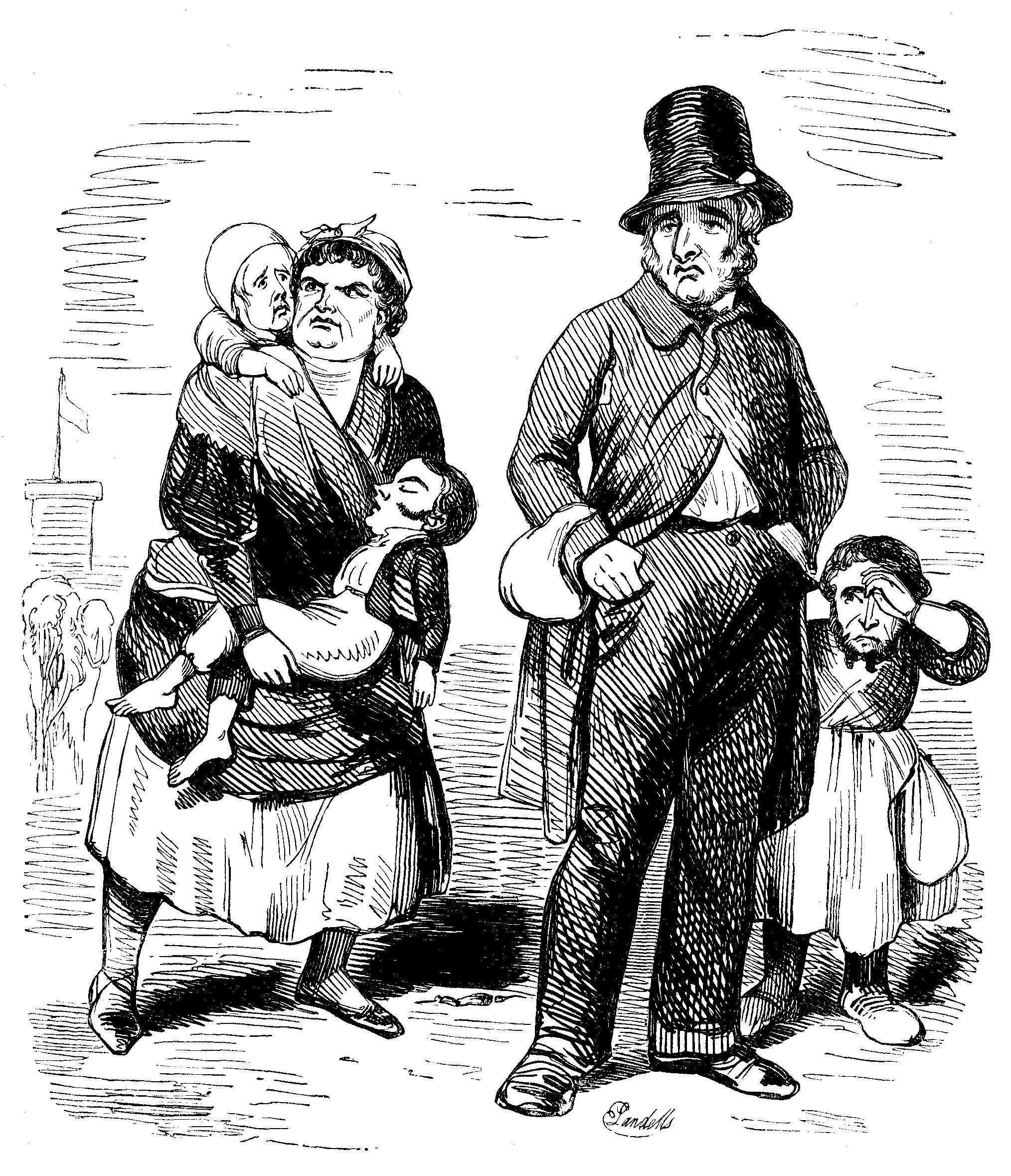
A poor family with three small children.

Word To Use Today: trouble. This word comes from the Old French troubler, from the Latin turbidus, confused (how appropriate) from turbus commotion.

Wednesday, 3 July 2013

Nuts and Bolts: puffing on the hills.

Does where you live affect the language you speak?

Well, of course it does - babies surrounded by Spanish speakers aren't going to grow up speaking Swahili, are they.

But is the native language of a place affected by its geography?

One new theory suggests that it is.

The sounds in question are called ejective consonants. You don't get them in English, but they involve building up pressure in your throat and then sort of spitting it out as you speak.

Caleb Everett of Miami University has done a huge study (covering six hundred languages. Respect!) and he's discovered that people who speak languages with ejective consonants tend to live over 1500 metres above sea level. His theory is that because the air is thinner at these altitudes, producing ejective consonants is fairly easy.

The only high populated landmass where you don't find ejective consonants is the Tibetan plateau. Mr Everett suggests the lack of ejective consonants occurs because Tibetans breathe faster than other humans, so ejective consonants aren't so easy to produce.

Ejective consonants certainly sound like hard work to a lowlander like me (I live about 120m above sea level).

They do sound rather fun, though.

Word To Use Today: eject. This word comes from the Latin word jacere, to throw.

Tuesday, 2 July 2013

Thing To Do Today: beetle.

When Darwin was asked what his studies had taught him about God, he replied that the Creator seemed to have 'an inordinate fondness for beetles'.

Now, I know about that sort of beetle:

File:Asian multicolored lady beetle.jpg
The Asian multicoloured lady beetle (Harmonia axyridis)

But what exactly what are people doing when they beetle off?

And what about people with beetling brows? Are they the ones with stray eyebrow-hairs that spring out like beetle legs?

Well, according to the dictionary, someone who beetles off is scuttling away rather as an alarmed beetle might do.

The beetling brows are nothing to do with beetle legs, though they are, neatly, something to do with Darwin. In this case beetle means to overhang. So beetling brows are bushy or prominent.


Darwin's beetling brows.

Beetle-browed also means sullen or scowling - but that's nothing at all, as far as I know, to do with Darwin.

Lastly, a beetle can be a thing like a blunt hammer, sometimes used for finishing cloth.

I do so hope that Darwin wore a beetled suit when he beetled off on expeditions to peer from under his beetle brows at lots and lots of...

...but you're ahead of me.

Thing To Do Today: beetle. The animal word comes from the Old English bitela, from bītan, to bite. The hammer word comes from the Old English bīetel, from bēatan, to beat, and is related ti the Middle Low German bētel, which means chisel, and the Old Norse beytill, which means...but perhaps I'll let you beetle off to your nearest dictionary and look that one up for yourself.


Monday, 1 July 2013

Spot the frippet: hubble-bubble.

Hubble bubble toil and trouble
Fire burn and cauldron bubble.

Everyone knows that quote from...well, somewhere or other.

(It's not, I'm afraid, from Macbeth: the Macbeth witches' cauldron goes double double. No, really, it does. In Act IV, Scene 1. Look for yourself if you don't believe me.)

Right, having got that one out the way, a hubble-bubble is usually a water-pipe or hookah:

File:Man sitting and holding a hookah.jpg
Photo by Sergei Mikhailovich Prokudin-Gorskii

But if you can't find one of those - and I can't say they're too common here in Southern England - then a hubble-bubble is also a hubbub or a turmoil.

Well, they're common enough almost everywhere. Try any school gate, shop with a sale on, or pub at throwing-out time, and there you are.

Bus and railway stations in the rush hour are good for hubble-bubbles, too.

If you live in the Gobi Desert, or somewhere else where it's not easy to find two people to rub together, then a hubble-bubble can also be a gurgling sound.

I can only suggest in this case that you either eat lots of ripe fruit, or buy some mouth wash.

Spot the frippet: hubble-bubble. This word was made up for fun in the 1600s to make bubble sound even funnier.