This blog is for everyone who uses words.

The ordinary-sized words are for everyone, but the big ones are especially for children.


Tuesday, 7 November 2017

Thing Not To Be Today: a cheapskate.

It’s never nice to be called a cheapskate. Especially if it’s true.

But is it true? Are you careful, or are you mean? 

Or, to look at it the other way, are you generous, or are you profligate?

Do you serve drinks in thimbles?

Do you always cut the shrink wrap just slightly too small?

Do you buy the extra-cheap bread that's so full of holes you have to eat three times as much of it?

Are you, in short, prepared to embrace some degree of suffering - or inflict it on others - because the inconvenience is outweighed by the pleasure of saving insignificant amounts of money?

Yes? 

Oh you cheapskate!

Thing Not To Be Today: a cheapskate. Cheap comes from the Old English ceop, bargain or price, and is ultimately to do with the Latin caupo, innkeeper. Where skate came from less clear, but the best guess is that it's to do with the old Scots insult skate (the Scots are brilliant at insults) which still has an echo in the word blatherskite or blatherskate, who is a person who talks on and on without saying anything much to any purpose. 

The song Maggie Lauder uses it:


(blatherskate comes near the end of the first verse. Good tune, too, eh?)

 and this may be how the word skate in this sense got to America, where cheapskate seems to have been coined.


Monday, 6 November 2017

Spot the Frippet: something rufescent.

Are you a scientist or a poet?

Not sure?

Well, can you spot a rufescent sexual reproductive structure of a subfamily Rosoideae angiosperm? 

If you can, or want to, then you're a scientist.

It will look quite like this:

File:Blush rose 1.jpg

If, on the other hand, when you see it you're only aware of spotting a blushing rose, then there's a brimming well of poetry in you.

(The photograph is of the lovely rose called Maiden's Blush, and was taken by Nadiatalent.)

Anyway, rufescent. It's basically a botanical term that means tinged with red or becoming red:

File:Ilex mitis - Cape Holly tree - berries detail 3.JPG
(these are the fruit of Ilex mitis, the Cape Holly Tree. Photo by Abu Shawka).


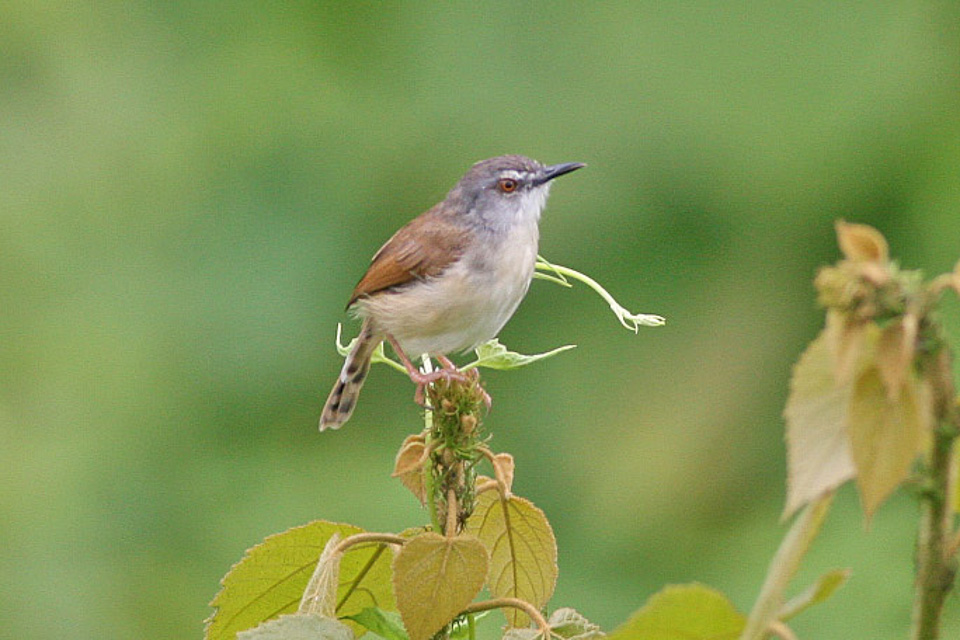
This is a rufescent prinea, photo by Ariefrahman. That's not an easy spot unless you're in the right part of India or South East Asia, but never mind: a human cheek reddened with exercise, fever, cold, heat, alcohol or embarrassment is quite rufescent enough for me.

Spot the Frippet: something rūfescent. This word comes from the Latin rufescere, to grow reddish, from rūfus, red or auburn.


Sunday, 5 November 2017

Sunday Rest: catholic.

Today is England's Firework Day. Hurrah!

We let off the fireworks to celebrate the failure of the 1605 plot to blow up the Houses of Parliament.

So, now, tell me: what do you call a small bunch of people who get together in secret and plot to bomb public buildings?

That's right: terrorists.

Now, I'm very fond of bonfire night, but it's becoming increasingly frowned upon because people claim it celebrates the death of Catholics (and it's true both that the plotters were Catholics, and that they were most horribly tortured and executed).

But these plotters weren't just Catholics, or just men, or just humans, or just people with beards. 

Engraving

The reason we're celebrating the day is because their terrorist plot failed.

Still, hey, it's probably best not to mention the Catholic thing, just in case, eh?

Word Not To Use Today: catholic. With a small c this word means wide-ranging, universal, liberal or broad-minded. It comes from the Latin catholicus, from Greek katholikos, universal, from katholou, in general, from kata- according to, and holos, whole.


Saturday, 4 November 2017

Saturday Rave: Morph

People have long felt a need for a universal language. People have quite often tried to make up one from scratch (though computers are demanding new words at such a rate that they seem to be making quite a good job of making one up themselves).

But look, here's someone who's already done it:

Morph-NMM-Bradford.jpg
(photo by Giles Farrington Flickr user giles 72)

He's called Morph, and he was created by Peter Lord and David Sproxton and a lot of other people (one of the modellers was Chris Entwistle).

This is Peter Lord with Morph:

Peter Lord making Morph June 2014.jpg
By The Rambling Man with assistance from Jane Ormes - Own work, CC BY-SA 3.0, https://commons.wikimedia.org/w/index.php?curid=33563272

Morph speaks...well, it's been called gobbledegook, but Morph makes noises people can understand, so I don't see why that doesn't count as language.

Have a look at this very short film (it's just over a minute long) and see if you can understand him.


Morph's language would be quicker to learn than Esperanto , anyway, wouldn't it.

Word To Use Today: morph. This word comes from the Greek morphē, which means shape (and, by the way, shape is what my grandmother used to call blancmange. Coincidence, or what?).


Friday, 3 November 2017

Word To Use Today: flight.

I spent yesterday scraping up perished rubber left behind after taking up the ancient underlay on a flight of stairs.

It was more fun than it sounds, partly because flight is such a lovely word. Next time you are labouring to climb some stairs remember that you're doing the human equivalent of flying.

A group of birds also sometimes comes in a flight - it might be a flight of swifts, perhaps, wheeling and screaming:

File:Apus apus flock flying.jpg
photo by Keta

so do groups of aircraft and arrows (come in flights, I mean: they don't usually scream). A raceful of hurdles is a flight, and so is an aviary's flying space. A cricketer, when he bowls the ball in such a way to make it turn bafflingly in its course, gives it some flight.

All mysterious and very nearly magical things - and, now I come to think about it, all literally uplifting.

Have a good day!

Word To Use Today: flight. This word comes from the Old English flyght - which shows that it's been practically perfect for over a thousand years.


Thursday, 2 November 2017

Plainly beautiful: a rant.

Look, it may have seemed funkily ironic to call your clothes label Acne, or Fat Face, or Sweaty Betty, or Weird Fish, but what you have to remember is that a) lots of people have no sense of humour whatsoever; b) what most people need when it comes to clothes is reassurance; and c) on the whole people are looking to draw attention away from their acne, fat face, body odour, and inability to master the being-normal thing.

Still, I suppose it's also true that the beautiful smug people won't worry; and that the rest of us tend to follow wistfully, if hopelessly, in their steps; and also that words stop having any meaning if they're used wrongly often enough.

So it shouldn't be a surprise that it seems to have worked out, after all.

Word To Use Today: acne. This skin condition is sometimes called, rather splendidly, acne vulgaris. It should really be called acme, because it comes from a misreading  by medical men in the 1800s of the Greek akmē, eruption of the skin.

Hey, I wonder if the clothes label is a misreading of acme?


Wednesday, 1 November 2017

Nuts and Bolts: good heavens!

Having spoken of unquiet souls yesterday at Halloween, it seems only polite to give a nod to All Saints Day and the good guys today. 

Now, the thing about saints is that they're variable. You get saints who were holy for a long time, like St Roch, who is said to have observed fasts even when breast-feeding; and then you get saints like St Alban, who led a heathen life and converted to Christianity only just in time to get martyred.

And then, of course, you get saints like St George, who is most famous for being unkind to endangered wildlife.

Now, if George was good (and presumably he was, to have earned the saint label), then presumably we can say that St Alban was better, but that St Roch was best.

But why not good, gooder, goodest?

Well, it seems to have been because people like to be tidy. The root of the word good is the Germanic word gath, which started off meaning to gather together (as, indeed, you might guess by the words gather and together). Once things were together then they became seen as pleasing, and then, later, good.

(Goods, meaning things able to be sold, comes from the same idea.)

Inconveniently, though, by the time the word good had started meaning, well, good, there were other words already in use that meant gooder and goodest. 

The root of these words was bat, which meant advantage (it's left a faint trail in our word boot, as in I got my phone for £20, with a £10 voucher to boot). Now, as I said, boot had been around long enough to have its own comparative, betara, and superlative, betest, and so there wasn't really much point in making up new comparative and superlative forms for good.

The really cool thing is that when a toddler, trying to form a superlative, says I like that one even betera, he's not only being irresistibly cute, but he's speaking Middle English.

But then all two-year-olds are geniuses, aren't they?

Word To Use Today: well, what's the best thing you've done today? That'll do.