This blog is for everyone who uses words.

The ordinary-sized words are for everyone, but the big ones are especially for children.


Tuesday, 7 August 2018

Thing To Be Today: jacent.

We've all been adjacent to something, but have you ever been jacent?

Yep. You have.

If you think about it, -ad at the beginning of a word usually means to, or towards, or near: so, as adjacent means next to, jacent should mean really snuggled up - and most of wouldn't object to as an aim for the day.

Sadly, though, jacent simply means to lie down.

Still, you don't have to do it alone, do you?

Thing To Be Today: jacent. This word comes from the Latin jacēre, to lie. Hic jacent means here lie in Latin, which you sometimes see on old tombstones: 

File:Hic jacent.JPG
photo of tombstone in Bad Waldsee by 4028mdk09


Monday, 6 August 2018

Spot the Frippet: something party-coloured.

But what colour is a party? 

This is, of course, a perfectly reasonable question, and the answer, also of course, will depend upon whether the party is being thrown to celebrate Halloween or Holi - or, indeed, Christmas or a wedding or winning the Cup Final.

But, as it happens, the party in party-coloured isn't that sort of a party at all. An alternative spelling is parti-coloured, and that makes it a bit less surprising that party/parti in this case means partly one colour and partly another, or others.

The world is full of party-coloured things:

File:Japanese Chin dog.jpg
Japanese Chin Dog. Photo by Pointer8

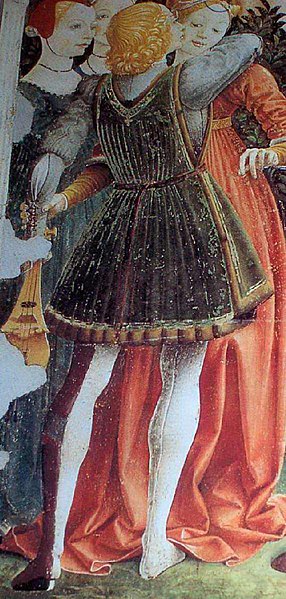
File:Particoloredhose.jpg
party-coloured tights. Detail from The Tiumph of May by Francesco del Cossa, about 1470.

File:Rosa Mundi.JPG
Rosa mundi. Photo by Libby norman

(To be party-coloured the colours need to be separate, not smeared or blended.)

So: what's the first thing you can spot?

Mine, very close to hand, was my yellow and white tea mug.

Spot the Frippet: something party-/parti-/coloured. Party used to mean of more than one colour. The word comes from the Old French, where it means striped, from the Latin partīre, to divide.

The word party meaning a social gathering comes from the same Latin word, which also came into English by way of Old French, this time as partie meaning part or faction. 

Which tells you everything you need to know about parties, doesn't it?


Sunday, 5 August 2018

Sunday Rest: jargonaut. Word Not To Use Today.

A jargonaut is someone who uses jargon too much.

Yes, it's a piece of jargon that belittles those who use jargon.

Now, is that a piece of post-modern brilliance? Or simple hypocrisy?

I know what I think.

Sunday Rest: jargonaut. This word, of course, is an echo of argonaut, which describes one of the men who sailed on Jason's ship the Argo, which was named after its builder Argus. The Greek naus means ship. The word jargon came into English from French, and is, pleasingly, basically the same word as gargle.

Saturday, 4 August 2018

Saturday Rave: A Lament by Percy Bysshe Shelley.

Shelley caused a lot of grief in his time, particularly to some young, impressionable girls and their families.

He also wrote some magnificent poetry.

I don't think this, below, is magnificent poetry, but if the metre and language don't do anything much for me, if there's no ravishing turn of phrase or cloud-dispelling use of metaphor, well, at least I can read it and think: well, serves you right!

O World! O Life! O Time!
On whose last steps I climb,
Trembling at that where I had stood before,
When will return the glory of your prime?
No more - Oh, never more!

Out of the day and night
A joy had taken flight:
Fresh spring, and summer, and winter hoar
Move my faint heart with grief, but with delight
No more - Oh, never more!

**

Well, diddums, quite frankly.

Word To Use Today: delight. This word comes from the Old French deleitier, to please, from the Latin de- away from, and lacere, to entice.


Friday, 3 August 2018

Word To Use Today: deipnosophist.

I know that no one can really use the word deipnosophist with a straight face - at least, I hope not - but it's a word to make people happy, all the same.

A deipnosophist is an expert in the art of dinner-table conversation, particularly if they have the knack of being interesting about unusual things.

Please note that it's conversation, and not a habit of lecturing, that makes someone a deipnospohist, for lecturing people is a terrible habit, especially at the dinner table, and quite likely to get you a face full of custard.

But even so...

...well, there are worse things than a face full of custard, aren't there.

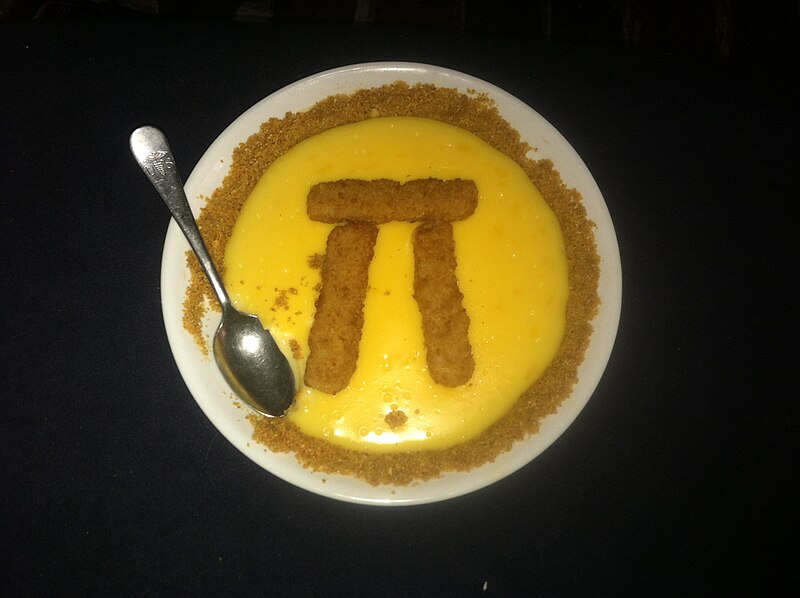
File:Fishfingers & Custard Pi-Pie.JPG
photo by Kalki

Word To Use Today: deipnosophist. This word entered the English language in the 1650s. Deipnosophistēs was the title of a fifteen-volume work by Athenaeus, who lived in the second and third centuries BC. The work takes the form of very wide-ranging dinner-table conversations, and a great deal of what we know about Greek civilisation comes from Athenaeus's books. Deipno- means dinner in Greek, and sophistēs means knowledgeable in the arts of.

Although no one wants to be thought a sophist (that is someone who reasons cleverly but falsely) to be a deipnosophist would be really rather lovely.


Thursday, 2 August 2018

William Blake and the pedants: a rant.

It's only quite recently that anyone's discovered exactly where William Blake, the poet and painter, is buried.

There's been a gravestone in the general vicinity for some time, but research and fund-raising by the Blake Society has now led to a new gravestone's being commissioned to cover the actual grave in Bunhill Fields, London.

This is the old stone:

File:Finsbury bunhill blake 1.jpg

But the people who were paying for the new gravestone wanted something fancier. Something more poetic. Something that's more of a tribute to Blake's genius.

A suitable text was decided upon without a public quarrel, but on the issue of punctuation...

The thing is, there are two versions of the agreed text in existence. There's the one in his original private notebook, and the one published.

The published version goes:

I give you the end of a golden string;
Only wind it into a ball,
It will lead you in at Heaven's gate,
Built in Jerusalem's wall....

The version in the private notebook has no punctuation at all, not even (gasp horror!) the possessive apostrophes.

Which version won? 

It's the punctuationless one. 

I think this is a shame, and this isn't because punctuation is inherently virtuous, but because Blake's private notebook should be, well, private.

Good grief. I hope no one goes and puts a scribbling from one of my notebooks on my gravestone. 

For one thing, it'll probably say: cucumber, soya milk, musli...

Word To Use Today: private. This word comes from the Latin privatus, withdrawn from public life, from privare, to bereave or deprive, from privus, single or individual.


Wednesday, 1 August 2018

Nuts and Bolts: full stops and periods.

Punctuation does upset people. I don't know why. 

I suppose that if wrong punctuation makes a sentence say something unintended then that might be a disaster, but otherwise I can't really see why such high passions rage, especially in people who are otherwise mild as milk.

Here's a case in point (unintentional pun: sorry): is a dot on the baseline of a piece of text a full stop or a period?

Well, pleasingly, quite possibly neither.

This isn't even a question of where you are in the world, though what an English person calls a full stop is often called in the USA (or the U.S.A.?) a period.

For instance: what's this baseline dot called if you're reading out loud:

3.14

?

(or, hang on, is it a decimal point?)

A typographer might call that mark a baseline dot, to distinguish it from an interpunct, which is a dot raised into the air.

If you maintain that History Is Right, then we should all be writing our full stops or periods as high as they'll go, as Aristophanes of Byzantium did a couple of thousand years or so ago (and possibly call the thing a stigmē teleia). 

(Aristophanes did employ a baseline dot, but it was used essentially as a comma: however, the scribes at the time couldn't be bothered with commas and so this system fell out of use, and by the 9th century AD some people were writing their full stops on the baseline. By the time printing came along this habit was generally established.)

Anyway, the use of the word period dates back to Ælfric of Eynsham, and Old English. The thing he called a period was a sign that looks like a modern full stop - but also, like Aristophanes's, acted as a comma. 

By the time Modern English came along the words period and full stop were beginning to be used consistently throughout Britain and the USA: a period was a baseline dot that wasn't at the end of a sentence. When it was, it was a full stop. That system worked very well right up to about 1900, when things got muddled.

Nowadays...well, nowadays there's an interloper appeared called a full point.

Aargh!

What is right?

Who can say? Not me. 

All I know is that sometimes people just need to go out and get themselves a life.

Word To Use Today If You Dare: full stop or period or full point, whatever rocks your boat. Period comes from the Latin peridos.