This blog is for everyone who uses words.

The ordinary-sized words are for everyone, but the big ones are especially for children.


Thursday, 8 January 2015

Somewhere nice: a rant.

File:Whitley Bay British Railways Poster.jpg

It's the time of year when everything you pick up - newspapers, magazines, cats - brings forth a slither of leaflets, producing something between the court scene in Alice Through The Looking Glass and a ticker tape parade.

Hmm...possibly not the cats...

Anyway, the fact is that those canny travel agents know that we've been cooped up with our nearest and dearest all Christmas and that we're desperate to get out and away. We'll go anywhere, literally anywhere, no matter how dull and uncomfortable it is, and no matter what the cost.

Yes, it's time to book our holidays.

And when we have booked them, what will happen? People will say:

'Are you going somewhere nice?'

And it's no good answering no, we though we'd go somewhere really horrible this year, because that just confuses people. You have to answer them as if they'd asked a sensible question.

The trouble is, appallingly, we can't help but suspect it is a sensible question. 

Because, always, at the back of our minds, we're beset by the dreadful fear that despite the photographs, gush and price tag, it isn't going to be very nice at all.

Word To Use Today: holiday. This word comes from the Old English hāligdæg, holy day.


Wednesday, 7 January 2015

Nuts and Bolts: reflexive verbs.

Hilary washes her sheets every day. (Good grief, Hilary, don't you have anything better to do with your time?)

Hilary washes herself every day. (For which we can all be grateful.)

Hilary is doing the same thing in both cases - that is, washing  - but the second example is a bit odd, because the person who washes (Hilary) is the same as the person who is being washed.

That makes washes (in the second example, though not in the top one) a reflexive verb.

Reflexive verbs are easy to spot in English because of the itself/herself/himself/yourself/yourselves/myself/themselves that usually goes after the verb. Many other languages have a similar extra word or ending put in to make it clear that the person who is being washed, loved, etc is the same as the person who is doing the washing, loving.

Having said that, there are important differences in how people think of their actions. Take the rather irritating Hilary, for example. There's nothing wrong with saying that Hilary washes herself every day, but an English person would generally say Hilary washes every day, and the fact that she's washing herself would be understood without actually having to say so.

The French language, for instance, is much keener to use reflexive verb structures than English is, and this probably explains the much-treasured postcard my daughter once received from a French pen-friend after a trip to London, explaining how interesting it had been to go to Buckingham Palace and see the guards relieve themselves.

File:Changing of the Guard, Buckingham Palace.jpg
photo: borteschistian

I'm beating myself up for not having gone with her to see them myself.

Thing To Use Today: a reflexive verb. There are lots of these all over the place, so help yourselves. The word reflexive comes from the Latin reflexus, bent back, from reflectere, to reflect.


Tuesday, 6 January 2015

12th and Last Day of Christmas: drummers drumming. Thing To Do Today.

It's Twelfth Night. Possibly. Unless Twelfth Night was yesterday or 17th January. People argue about this.

Anyway, it's more or less Twelfth Night, and the essential point about Twelfth Night is that everything is bonkers. If you have a king about the place then he must become a peasant for the night, and the peasant who finds a bean in his cake is elevated to the eminence of king.

If he finds a pea in this cake then he's made queen.

Those of you who are nodding sagely and murmuring wise things about chaos, cross-dressing, and Shakespeare's play have a point - though as a matter of fact Shakespeare's play was first performed on 2nd February, which is also, according to some people, the last day of Christmas.

But anyway, why are the drummers drumming?

Well, in Nuremberg there used to be a Twelfth Night tradition for all the children to run around knocking on all the doors of the town. In Sussex, England, people still go out and sing to the apple trees to ensure a good crop, and this may well involve a bit of percussion. Twelfth Night is also the start of the Carnival Season - and what is carnival without.some serious drums?

Notting_Hill_Carnival_2005_005
Copyright: Yuichi (via Wikimedia Commons)


I don't know if the musical version of Charlie and the Chocolate Factory involves any drumming, but the company at Drury Lane Theatre in London will be celebrating Twelfth Night with cake and punch. The company there have been having a free feast on Twelfth Night since 1796, when Robert Baddeley left some money to the theatre for a celebratory nosh-up.

It would be a sad thing not to join in the Twelfth Night fun, and luckily even the most tin-eared of us can drum. So let's see if we can drum up some enthusiasm, at least. Ladies and gentlemen, I hereby present...

(please insert a do-it-yourself drum roll here)

...Twelfth Night!

And let the revels commence!


Thing To Do Today: drum. This word is actually rather dull. It means either the noise of a drum or the shape of a drum. It probably comes from the Middle Dutch tromme, which is an imitation of the sound a drum makes.


Monday, 5 January 2015

11th day of Christmas: pipers piping. Spot the Frippet.

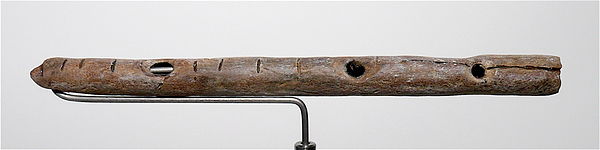
It probably all started with a bone.

I don't know if this bone was already picked clean by small rodents, or whether it was a left-over from a barbecue, but it may have been a wing-bone of a vulture.

Whatever it was, someone picked it up and began playing with it. They may poked their next-door neighbour in the ribs with it to begin with, and then, when that threatened to provoke a violent retaliation, perhaps they used it to stir the dust into swirls.

And then, perhaps, they realised that they had a bit of mammoth meat wedged between their molars, and so they put the bone into the mouths to try to winkle the stuff out.

The trouble is that a bone is too thick to get between your teeth, and, as they heaved a sigh of frustration, they found themselves also producing an odd squawking sound.

Now, I don't know what manners were like amongst humans 35,000 years ago when this was happening, but as humans were humans, I should imagine this squawk was met with quite a bit of amusement, some insults, and quite possibly some nose-holding.

And of course the person with the bone would have protested his innocence, and made several attempts at reproducing the squawk form the bone to prove it.

And, eventually, he would have succeeded.


Aurignacian flute made from an animal bone

And from this incident came all the flutes, oboes, saxophones and recorders that delight and torture us today - though on the whole it's still a good idea not to send your true love even one single piper piping, let alone eleven.

Spot the frippet: pipe. How easy is this? Drain pipe, water pipe, windpipe...the word comes from the Old English pīpe, from the Latin pīpāre, to chirp. 


Sunday, 4 January 2015

On The 10th Day of Christmas: lords a-leaping. Sunday Rest.

I don't like words that end in an -ord sound very much.

It might be because my surname used to be Ward, and almost everyone used to hear it as Wood unless you elongated the vowel until you sounded like a dyspeptic cow.

Bored, board, cord, ford, hoard, sawed...it's a good job that word rhymes with bird, herd and curd or I might not have ended up where I am today...

...hmm...make that possibly a good thing...

Anyway, today is Sunday and so it's time for a rest. Many lords understand this. Indeed, although there are apparently ten lords a-leaping today The Lords* themselves are certainly not a-leaping anywhere: in fact they went off on holiday on the 17/12 and they won't be back until 6/1/15.

So what is it with all the leaping? I mean, after all those New Year celebrations you'd think that was the last thing you'd want to do was...

...ah.

Of course, the English language gives us the answer in one of its commonest expressions: drunk as a lord.

As anyone who's been to Trafalgar Square in London at this time of year knows, leaping into rivers and fountains when inebriated is rather a tradition.

I just hope the lords' have lots of warm blankets at their castles. I'd hate them to catch cold.

10-lords-a-leaping

Word Not To Use Today: lord. This word comes from the Old English hlāford, bread keeper.

*The Lords is Britain's second House of Parliament. It's made up, bizarrely, of lords and ladies (none elected and few there by reason of heredity) who are basically the wisest possible (though, sadly, not always wise) folk from all sorts of walks of life - industry, charities, civil service, army, law, churches, politics, newspapers, science, the arts. Yes, it's a crazy system, but it has two great advantages: it means that most of The Lords aren't politicians; and it works.


Saturday, 3 January 2015

The 9th Day of Christmas: I cannot dance upon my toes by Emily Dickinson.

I wonder where those nine ladies were dancing?

At a ball, I suppose, all dressed in their finest, the sheen of their silks dazzling the men into tameness.

Or in some sparkling ballet?

Or perhaps, or perhaps...

...perhaps it was not an orchestra that lifted their limbs, but a thrill of joy. Perhaps it was not the need to conquer that traced the patterns through the air, but sheer high spirits.

Perhaps it was not the skill of long tutoring that rose towards grace, but the rising of Nature through the bounds of Civilisation until -

I cannot dance upon my Toes
by Emily Dickinson

I cannot dance upon my Toes --
No Man instructed me --
But oftentimes, among my mind,
A Glee possesseth me,

That had I Ballet knowledge --
Would put itself abroad
In Pirouette to blanch a Troupe --
Or lay a Prima, mad,

And though I had no Gown of Gauze --
No Ringlet, to my Hair,
Nor hopped to Audiences -- like Birds,
One Claw upon the Air,

Nor tossed my shape in Eider Balls,
Nor rolled on wheels of snow
Till I was out of sight, in sound,
The House encore me so --

Nor any know I know the Art
I mention -- easy -- Here --
Nor any Placard boast me --
It's full as Opera --


Word To Use Today: ballet. This word comes from the Italian balletto, a little dance, from ballare, to dance.


Friday, 2 January 2015

8th Day of Christmas: maids a-milking. Word To Use Today.

The first time the word maid really made an impression on me was when watching The Adventures of Robin Hood.

File:Fairbanks Robin Hood giving Marian a dagger.jpg
Douglas Fairbanks and Enid Bennett in the 1922 film Robin Hood. It wasn't actually the Fairbanks version I used to watch, though - I'm not that old - it was Richard Greene's.

Maid Marian was Robin Hood's girlfriend.

It occurs to me now that one of the ways Robin Hood's Merry Men kept themselves so very merry was by making up silly names for themselves. Will Scarlet was so called, for instance, because of the colour of his stockings; fat Friar Tuck was obviously fond of tucking in to a good meal; and (plainly not caring that sarcasm is the lowest form of wit) they gave that huge hulk of a Merry Man John the nickname Little.

Hmm...

I just hope that there was no sarcastic element involved in Maid Marian's name, that's all.

Word To Use Today: maid. This word is a shortened form of maiden. It comes from the Old English mægden, and is related, pleasingly, to the Old Norse mogr, which means young man.