This blog is for everyone who uses words.

The ordinary-sized words are for everyone, but the big ones are especially for children.


Saturday, 7 February 2015

Saturday Rave: Farewell by H S Try.

You can't always trust one star reviews ('this book wasn't interesting because it didn't have any daleks in it') and five star ones must also be treated with extreme caution ('this is the best book ever written, and once it's published it'll be a must-read'); but sometimes you come across an expert opinion to which you are forced to defer.

Sir Jeremy Morse has for the last sixty years been the most consistently successful solver of crosswords in Britain. He makes up clues for crosswords, too, and as a matter of fact Colin Dexter named his famous cruciverbalist detective after him (though Dexter's Inspector Morse's first name was of course not Jeremy but Endeavor). 

All in all, I have to accept that Sir Jeremy knows a thing or two about crosswords.

Now, Sir Jeremy's favourite clue was written by HS Try. It goes like this:

In autumn, we’re piling up the last of the leaves. 

Now, I think it's a nice clue, too: highly evocative of smoky autumn days. Unfortunately what it is not evocative of, as far as I'm concerned, is the word farewell, which apparently is the answer to the clue.

Still, Sir Jeremy is the expert, so it must be absolutely brilliant.

Er...farewell?

Farewell???
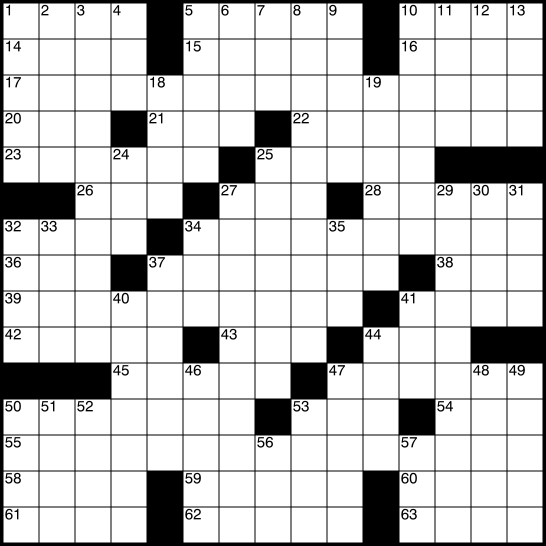
File:CrosswordUSA.svg
image wikimedia commons  en:User:Michael J

Word To Use Today: cruciverbalist. This isn't a word you can use seriously, but it's good fun all the same. It means a crossword puzzle enthusiast. It's from the Latin words crux, cross, and verbum, word.

Hang on...farewell...well, fall means autumn, doesn't it, and farewell is to do with leaves. Ah, and we're is piled up (that is, written down with the two bits in the wrong order) in the middle of the word.

I think that all must be something to do with it...

Friday, 6 February 2015

Word To Use Today: catamaran.

Catamarans can be lovely things:

catamaran
Photo eric walker, Panoramio image ID 39493526

Though sometimes they're not so much lovely as, well, rather unlikely:


German navy research ship Planet

However, the reason I chose to write about this word was for its derivation, which has made me see catamarans in an entirely new light.

Word To Use Today: catamaran. This word comes from kattumaram, which is the Tamil for tied timber.


Thursday, 5 February 2015

Nutella: a rant.

A French court has prevented the parents of an infant girl from naming her Nutella.

The child was born on 24 September last year, but, when her birth came to be registered, her case was referred to the French family court, who found that such a name was contraire à l’intérêt de l’enfant - against the interests of the child.

If a name is not judged to be against the interests of the child, then in France you can call your child anything you like.


The parents of the child didn't turn up for the hearing, so the judge in their absence decided to rename the little girl Ella. As he said, Nutella is a commercial name for a spreadable paste and such a name is likely to result in the child being mocked and suffering des réflexions désobligeantes.

Mind you, it might be better to be mocked because your name is nuts rather than because you're ugly.


Is the French court's decision a sensible one? Definitely. Will it 

make little Ella happier? I have no idea.


You see, one of my daughters was born, quite a long time ago, on 

24 September. I called her Helena.


She hated her name quite passionately, and as soon as she could 

speak she insisted on changing it...


...to Oxtail.


Thing To Consider Today: is Nutella a worse name than 

Cinderella? Because it didn't do her any harm, did it.


Wednesday, 4 February 2015

Nuts and Bolts: commoratio.


'Space is big. You just won't believe how vastly, mind-bogglingly big it is. I mean, you may think it's a long way down the road to the chemist's, but that's just peanuts to space.'
The Hitchhiker's Guide to the Galaxy by Douglas Adams.

Commoratio (which isn't, despite its name, a naval rank distinguishable by lampshade-sized epaulettes) is all around us. Really, it's all over the place. It surrounds us. You'll find it all the time in newspapers, and constantly in speech - and, particularly, in speeches.

Commoratio is so all-pervading that it's the easiest thing to come up with an example that shows you how it works and how it may appear in our language.

In fact there's so much commoratio about that thinking up examples is straightforward, simple, and the work of a moment.

As you may have guessed by now, commoratio is the repetition of an idea, saying it again and again, and of course this is a jolly effective way of getting things to penetrate people's thick heads.

In fact it's so effective, and such a good tool of communication, that we use commoratio frequently and often. 

That makes us rather clever, don't you think?

Thing To Use Today: commoratio. This word comes from the Latin word for dwelling.


Tuesday, 3 February 2015

Thing To Do Today: be lax.

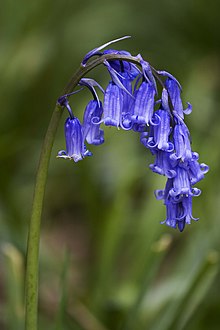
Hyacinthoides non-scripta (Common Bluebell).jpg

We're only human.

We could be thinner, fitter, more knowledgeable and perhaps even nicer people...

...but here we are.

Ah well.

After all, how can we seize the day if the day is fully booked?

Thing Probably To Do Today: be lax. This word comes from the Latin laxus, loose, and at first, charmingly, was used with reference to the bowels.

Nowadays, flower clusters are lax if they are loosely arranged, and speech sounds tend to be lax if they're unstressed and over quickly.


Monday, 2 February 2015

Spot the Frippet: something crumbly.

All sorts of things are crumbly: rock, cheese, one's New Years resolutions.

The perfect crumbly-topped pudding can be made by stirring a spoonful of cornflour and perhaps some sugar into some fruit, and then topping it with 3oz butter rubbed into 6oz flour, 2 teaspoons of ginger, 4oz ground almonds and 4oz demerara sugar, and then cooking it at 180C for about half an hour or so.

File:Apple and Blackcurrant crumble.JPG
photo Goddards Pies Ltd  ...though actually the crumble here doesn't look all that, well, crumbly, does it. Ah well.

If you're no cook, then in Britain a crumbly is an affectionate insult. It describes an old person.

They're generally not too fast-moving, so they're easy enough to spot.


Spot the Frippet: something crumbly. This word used to be crimble, and is probably from some German language. Before that it was perhaps something to do with the Latin grūmus, a heap of earth.

Sunday, 1 February 2015

Sunday Rest: psychonaut. Word Not To Use Today.

Words, as I've said before, come with echoes. If you have warm happy associations connected with the word psycho then you'll probably have warm happy associations connected with the word psychonaut.

So...er...anybody?

For me, the naut bit isn't much better. Nauts are a bit of a let-down, and perhaps a bit of a con. I mean, astronauts don't really explore the stars, do they, nor an aeronaut the air...

...and to me it all reeks rather of marketing.

So what is a psychonaut, anyway? It's someone who willingly puts his or her mind in an unusual environment and then sees how it reacts.

The unusual environment may involve hypnosis, trances, drugs, mental or physical deprivation, repetition, or dreaming.

Of course this sort of thing has a very long and even, in parts, respectable history.

But psychonaut still sounds too much like a desperate attempt to sell a children's cartoon, to me.

Sunday Rest: psychonaut. This word comes from the Greek psychē, soul, spirit or mind, and naútēs, sailor or navigator. Psychonaut seems to have been coined by Ernst Jünger, who used the term in a 1970 essay.