"Some of the prose in the novels [on the Mann Booker shortlist] actually glows."
So says Sir Peter Stothard, editor of the Times Literary Supplement and judge of this year's Man Booker Prize.
Really? Actually? Glows?
Well, I suppose if he were reading it on a screen it might do.
"If the English novel does nothing to renew the English language, then it really
doesn't do anything."
That's another of Sir Peter's. Nothing? Actually? Well, Sir Peter is presumably the expert.
"In a normal year, you might read 20 novels"
Sir Peter again. Twenty novels a year? Good grief, that's only two thousand novels in a century.
Hm. Perhaps not so expert, then.
Actually.
Word To Use Carefully Today: actually. This word came to English in the 1300s. It comes from the Late Latin āctuālis relating to acts,
practical, from Latin āctus, act.
It means existing in reality, as a matter of fact.
Thursday, 4 October 2012

Wednesday, 3 October 2012
Nuts and Bolts: lipograms.
Language is magical, complex and flexible. It can transmit almost any thought from one blancmange-like blob of a brain to another completely separate blancmange-like blob of a brain.
Wirelessly.
And without ever running out of charge.
Hang on, let's just stop for a moment and contemplate the beauty of it.
Isn't it marvellous.
Some people, though, are never satisfied. That's why we have lipograms.
A lipogram is a piece of writing which deliberately misses out one or more letters of the alphabet.
No, I don't know why, either, but there have been whole novels written without, for example, the letter e (Ernest Vincent Wright's e-less novel Gadsby is over 50,000 words long). Even more bafflingly, people have written lipogrammatic versions of the Iliad (Nestor of Laranada), the Odyssey(Tryphiodorus), and Hamlet (Gyles Brandreth).
On which note, baffled and feeling slightly faint, I think I'll go and have a nice lie down.
Thing To Do If You Can Really Be Bothered: construct a lipogram.
This post is lipogrammatic in that I don't think it contains the letter between p and r, or the last letter of the alphabet. There may be other letters missed out, too. Feel free to check, folks - though I really do hope you've got better things to do.
The word lipogram comes from the Greek leipein, to omit, and graphein, to write.
Tuesday, 2 October 2012
Thing To Do Kindly Today: trample.
Trample is a lovely word: who doesn't delight in trampling through fallen leaves or cardboard boxes?
Trampling grapes is good, too, because then you're on the way to producing wine; and trampling some washing in a tub is as good a way as any of getting it clean.
Well, apart from putting it in an automatic washing machine, it is, anyway.
The word trample is a frequentative, which is a word with an ending tacked on to it to show that you have to do it again and again. In the case of trample, of course, what you're doing again and again is tramping.
Someone doing lots of trampling is a trampler, which is an old word for a solicitor (that's the British sort of solicitor, who is a highly qualified lawyer). This seems to be because he or she spends so much time going backwards and forwards between barristers (they're the sort of lawyers who wear wigs in court) and their clients.
It can't be denied that sometimes trampling is destructive or mean: we can trample on people's feelings, or trample on flowers. Luckily, though, none of us would dream of doing such things.
Thing To Do Kindly Today: trample. This word comes from tramp, which may be something to do with the Gothic ana-trimpan to press heavily upon. The German word trampen means to hitchhike.
Monday, 1 October 2012
Spot the frippet: umbo.
No, really, this is easy.
An umbo can be the small hump you find in the middle of the cap of a mushroom or toadstool:
Or, if you're living in a fungus-free zone, then an umbo is also the bulgiest bit of a two-part shellfish.

Photo Féron Benjamin
It's also part of the ear drum, but I agree that's not easy to spot unless you happen to have a medical scanner handy. Or a severed head.
Eu...
For those of us with either a museum habit or a time machine, then you can always go for the sort of umbo that's the boss in the centre of a shield, especially a Saxon one:

So there we are: umbones (look at that gorgeous plural! You say it um-bone-eez. Or, if you're dull, you can use the alternative plural form umboes) all over the place.
However did we manage without the word before?
Word To Use Today: umbo. This word is Latin and means either projecting bit, or the boss of a shield.
Sunday, 30 September 2012
Sunday Rest: Word Not To Use Today: sphygmoid.
Yes, I know, you have more taste than to use the word sphygmoid on any occasion.
Still, for those thinking of inflicting sentences like:
The club was pounding with the sphygmoid beat.
or:
Between the rows of cheering, terrified women, the boots of the soldiers sounded sphygmoidally on the flags.
or:
the ribs of the great ship echoed to the sphygmoid crashing of rivets being hammered home.
Just don't.
Okay?
Word Not To Use Today: sphygmoid. This is a medical word meaning resembling the pulse. Any but a strictly technical use will make you look like an idiot.
Ther word comes from the Greek word sphugmos, pulsation, from sphuzein, to throb.
Saturday, 29 September 2012
Saturday Rave: Piers Shonks
This is a wonderful story, not nearly as well known as it should be, and the whole thing takes place in Hertfordshire, the county of England in which I live.
'The Pelham district was troubled with an enormous dragon
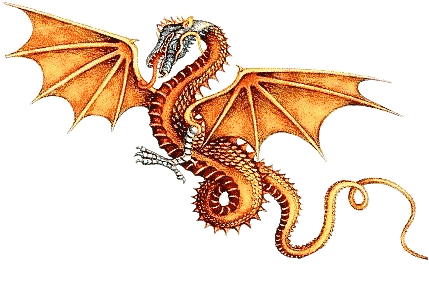
that committed great havoc with the flocks and herds of the neighbourhood.
'Piers Shonks, a valiant man and a renowned hunter, determined to destroy the reptile; therefore fully armed with his hounds, so swift of foot that they were said to be winged, he sallied forth in search of the monster. The dogs soon gave tongue, and by their attacks and noise so distracted the attention of the dragon that it gave Piers an opportunity to thrust his spear into a vulnerable part and speedily despatch it.
Instantly the death-struggles had ceased the Evil One appeared,
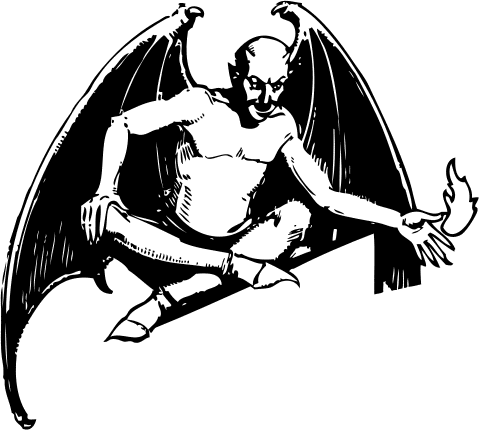
vowing vengeance on our hero for having destroyed his emissary, and threatening to have Shonks after his death, body and soul, whether buried in the church or out...'
...which was, obviously, a bit of a problem for our hero. But luckily Piers Shonks was a cunning man, and if you visit Brent Pelham church you can see how he escaped the eternal clutches of the Evil One.
For there you will find Piers Shonks' tomb, neither in the church nor out of it, but built snugly within the church's walls.
Is there anything anywhere more deeply satisfying than a tale of cunning triumphant? Or anything more disconcerting than the idea that the Evil One has a pet dragon?
Not that I can think of at the moment.
The above version of the story is by W B Gerish.
Word To Use Today: shonk. This is a version of shank, meaning part of the leg. It probably means that Piers Shonks was very tall (huge human bones are said to have been discovered in the church). The word comes from the Old English scanca.
If you're in Australia or New Zealand then shonky means dodgy and possibly illegal, unreliable or unsound.
Nothing like the story of Piers Shonks, then.
Friday, 28 September 2012
Word To Use Today: stammel.
You don't know what stammel is?
Well, be grateful.
Stammel is a sort of coarse woollen cloth. It's usually dyed a rather unpleasant red:

This colour is called stammel.
and it's used to make underclothes.
I'm itching already!
A stammel can also be a large awkward mare, or what John Ash in 1775 called a bouncing wench. John Ash also said that stammel is a sort of bay colour, but as far as I know no one else agrees with him.
The janissaries, the fierce fighters of Ottoman Turkey, are said to have worn stammel breeches:

So now we know why they were so bad-tempered, don't we.
Word To Use Today: stammel. This word comes from the Old French estamin, from the Latin stāmen, a thread.
Subscribe to:
Posts (Atom)