This blog is for everyone who uses words.

The ordinary-sized words are for everyone, but the big ones are especially for children.


Friday, 14 June 2013

Word To Use Today: limicoline.

Limicoline is, obviously, much too lovely a word not to use at least once a week.

It means to do with shorebirds of the order Charadrii, which includes plovers:
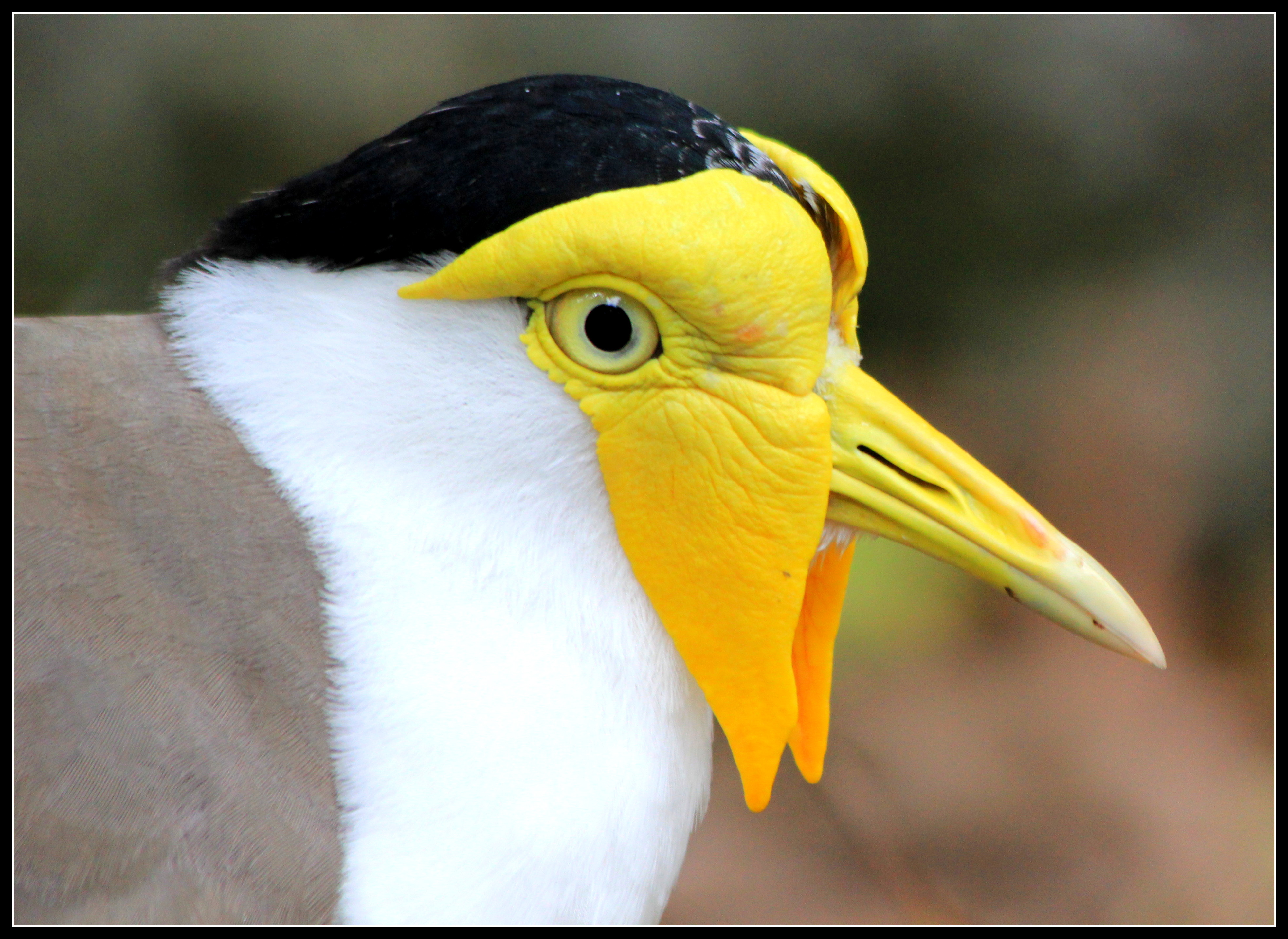
File:MASKED LAPWING (8552521221).jpg
Photo by CUATROK77PHOTOS.  That's a masked plover, Vanellus miles

sandpipers:

File:Pectoral Sandpiper Mendocino.jpg
That's a Pectoral sandpiper,Calidris melanotos. The photo is by Alan Vernon.

snipe:

File:African Snipe mburo dec05.jpg
An African snipe, Gallinago nigripennis. Photo by Aviceda.

oystercatchers:

File:Oyster catcher aerobics.jpg
this one's doing aerobics. Photo by John Haslam.


and avocets:

File:Avocet 4416.jpg
Taiwanese avocets. (I think they're Recurvirostra avosetta.) Photo by Alnus.

Yes, you may say, but why should I wish to refer to any of those birds, lovely though they may be?

Well...

...hm, that's a good question, isn't it.

Er...well, just think of the fun of coming back from a trip away and telling your friends the place wasn't exceptionally limicoline.

I mean, you'd be bound to acquire a reputation as a genius in a single word.

And what more could anyone want than that?

Word To Use Today: limicoline. This word comes from the New Latin Limicolae, which use to be the name of the order Charadrii. It comes from the Latin words līmus, mud, and colere, to inhabit.


Thursday, 13 June 2013

A little rantette.

Tesco, which is British supermarket, has sent me a special offer: sweetcorn cobbettes at fifty pence off.

Cobbettes?

But what on earth...actually, come to think about it, I think I know what a cobbette is. I think it's half a cob. Tesco sells sweetcorn like that.

I don't know why, but there it is.

But, you know something?  If I wanted to buy my cobs chopped in half, then discovering that they are called cobbettes would make me change my mind.

Because nothing that ends -ette is classy, cool, or covetable.

Caravanette, laundrette, cigarette, leatherette, maisonette...

Even brunette is faintly patronising, now I come to think about it.

Yes, okay, there are some useful words where the -ette doesn't imply dinky, such as casette, omelette, and silhouette, and there are a few where being small isn't necessarily a bad thing, as in marionette and silhouette, but on the whole -ette words are a poor sad bunch.

And if for some reason I should hanker after a half-sized cob, I shall take a cleaver to it.

As I suggest Tesco does to the word cobbette.

Word To Use Today: one that doesn't end in -ette!

PS Why on earth is there an extra b in it?

Wednesday, 12 June 2013

Nuts and Bolts: 404.

A 404 is a stupid or ineffectual person.

The word 404 - if it is a word - comes from a World Wide Web error message: 404 not found.

There's probably a literary term for this kind of word - again, if it is a word - but unfortunately I have no idea what it is.

In my Collins Dictionary it comes between four-o'clock and four-part, which means that the dictionary indexes it as four-o-four. But I don't know if anyone ever writes it that way.
 
It was certainly written in numbers during the 2011 protests in Greece, where one of the most popular slogans was "Error 404: Democracy not found".

In Tunisia, censorship of the world wide web (hmmm, so it's not that world-wide, then, is it?) led to 404 messages becoming so common that Tunisian bloggers invented a character called Ammar to blame for all the nuisance.

In England, 404 can also mean utterly clueless.

And, having tried to write this post, I realise that describes me beautifully.

Word (if it is a word) to use today: 404. Or perhaps 747, which is a jumbo jet. Or 322, which is the bus that used to take us to town from my childhood home.

Or 2, which is a hair cut.


Tuesday, 11 June 2013

Thing To Do Today, Possibly: be foxy.

There are so many ways to be a fox.

For a lady then mascara, a feather boa, and an inviting look is enough, but any person of any age or sex who's being cunning is being foxy. 

A time-traveller from several hundred years ago can be a fox simply by being drunk.

A barrel of beer (The Word Den does have some very odd readers)is foxed when it's gone sour; a fish is foxed when it's stupefied; a horse is foxed when it's had its ears trimmed; a book is foxed when its pages are marked with brown spots; and a shoe is foxed when it's had its uppers repaired, possibly with decorative strips of leather.

If you're not a barrel of beer, a fish, a horse, a book or a shoe, then you can always do an Australian fox, which will mean either to pursue someone stealthily, or to chase and retrieve a ball.

I think I'll go with the chasing-a-ball option, myself.

Thing To Do Today. Possibly: be foxy. This word has been the same for about a thousand years. It's related to the Sanskrit word puccha, which means tail.

Most of the fox terms are to do with a fox's cunning or its colour. The term for drunkenness is probably something to do with the colour of a drunkard's nose.

Monday, 10 June 2013

Spot the frippet: sleuth.

I first came across this superbly slippery word in that great work Jennings Goes To School, when Jennings and his trusty friend Darbishire begin to write a detective story called Flixton Slick Super Sleuth.

Now, you may say that it's hard enough to spot an ordinary sleuth, let alone a super one, but, consider: there is almost certainly a spy satellite somewhere above your head; Google knew when it was my birthday; and even this computer, on which I now type, keeps trying to sell me things to match my outfit for my daughter's forthcoming wedding.

Apart from this sort of electronic sleuthing there are human sleuths behind almost every twitching curtain and garden fence. (It's all right, there's no need to worry: the chance of anyone spotting you doing anything even remotely interesting is vanishingly small.)

Spotting this frippet is actually even easier than that, because sleuth is a contranym - that is, a word that means itself as well as its own opposite. You see, sleuth is also a form of the word sloth. So, as well as meaning keen, dogged and bloodhound-like:


Pypaertv modyfikacja Pleple2000

sleuth also means lazy, slow, delaying and neglectful.

And, obviously, spotting that sort of behaviour won't cause anyone any trouble at all.

Spot the frippet: sleuth. The word meaning detective comes from the Old Norse slo, which means to track or trail. The word for laziness comes from the Old English sláw, which means slow or sloth.

Sunday, 9 June 2013

Sunday Rest: Word Not To Use Today: blackdamp.

If there's a word which has a greater air of despair, dirt and death than blackdamp then it's probably chokedamp; which is the same thing.

Blackdamp is a gas that's lethally low in oxygen and high in nitrogen and carbon dioxide. It's found in mines, especially after an explosion.

You can also find it (though I very much hope you don't) in ships' holds, tunnels and sewers.

The symptoms of blackdamp are very much like those of tiredness, but the effects can progress to unconsciousness and death in a matter of seconds.

Now I come to think about it, blackdamp, a nasty-sounding word for a horrible thing, is a superbly evocative piece of language.

But it's one we must all hope never to have to use, all the same.

Word Not To Use Today: blackdamp. Also called stythe, as well as chokedamp. The damp bit is believed to come from the German Dampf, which means vapours.


Saturday, 8 June 2013

Saturday Rave: Brief Lives by John Aubrey.

Brief Lives is a book of anecdotes written by a dedicated gossip.

It has nothing to recommend it except its humour, liveliness and the gloriously varied view it gives us of people in high life.

Unfortunately John Aubrey was writing in the 1600s, so any celebrity value the book had has largely disappeared. But the book still abounds with excellent stories.

This Earl of Oxford, making of his low obeisance to Queen Elizabeth, happened to let a Fart, at which he was so abashed and ashamed that he went to travel, seven years. On his return the Queen welcomed him home, and said, My Lord, I had forgot the Fart.'

Ah well. The poor Earl's mishap seems to have given the queen a lot of joy, anyway.

And, thanks to John Aubrey, it's wafted delightfully down the centuries all the way to us, too.

Word Probably Not To Use Today: fart. This word may no longer be suitable for use in polite society, but it has been around for a long time. It comes from the Middle English farten and has very ancient roots going right back to the Sanskrit pardatē, which means he who breaks wind.