This blog is for everyone who uses words.

The ordinary-sized words are for everyone, but the big ones are especially for children.


Friday, 7 November 2014

Word To Use Today: geoduck.

A little learning, as Pope said, is a dangerous thing. Which is a bit of a pain because, lets face it, a little learning is all any of us are ever going to acquire.

I mean, you may well know absolutely everything about Plato and Pittsburgh, but who won the FA Cup in 1923*?

Anyway, geoduck. Those of us with a little learning will know that there's a strong chance that a word that begins geo is something to do with the Greek word for the earth; as for duck, well everyone knows what a duck is.

Except, of course, those of us with a little learning (which is, yes, all of us, see above). We will be thinking about Bombay Duck, which is a sort of fish. Here the duck bit of the name seems to be something to do with the fact that once the stuff is preserved it stinks to high heaven. Daak is an Indian term for mail (as in letters and parcels) and my guess is that, like mail, Bombay Duck communicated over a great distance. 

So, geoduck? Could it be a sort of mud-wriggling lungfish?

No, it can't, though as it happens you're not a million miles away (which is a good thing or you'd be well on the other side of the moon). A geoduck is a large (sometimes up to two metres long) edible clam found in Canada, the USA and New Zealand:


They're not only big, but long-lived: the oldest geoduck is said to have been 168 years old.

(Yes, you're seeing correctly: they do have things that look like trunks, and are sometimes called elephant clams.)

So there we have it. Geoduck. A word to confuse everyone, and to be treasured all the more for that.

Word To Use Today: geoduck. My Collins dictionary suggests that the first part of this word is pronounced as in geography, but Wikipedia suggests it's pronounced as in gooey. The word comes from the Lushootseed gʷídəq, which might mean dig deep. Or possibly something ruder.

I'm not sure how to suggest using this word, but it's too good to lie neglected in a dark dictionary. As slippery as a geoduck? As plump as a geoduck? As juicy as a geoduck? Guzzling like a geoduck?

Yes. I quite like that one.

*Bolton. The FA Cup is a soccer competition.

Thursday, 6 November 2014

Pss! A rant.

At Osbourne, Queen Victoria's estate on the Isle of Wight (nice exterior designed by Prince Albert; ghastly, narcissistic, and possibly even necrophiliac interior mostly ordered, I should imagine, by Queen Victoria) there's a Swiss Cottage that was built for the young princesses and princes to play in.

There's a pretend fort nearby, and garden plots where the poor children were required to raise vegetables. Not far from these vegetable plots are a collection of small green wheelbarrows, one for each of Queen Victoria's children, and each inscribed with a name.

Well, actually each not inscribed with a name.

Pss R, it says on one.

Here's the person I think must have been Pss R. (She's grown up in this picture, but I've chosen it because it's so lovely. Her name was Vickie.)

1858 Princess Royal Victoria's wedding dress

But, really, Pss R? I'm assuming that stands for Princess Royal, but it's a far-from-lovely abbreviation.

Poor Vickie.

Word Not To Abbreviate Today: princess. This word comes to us as a feminine form of prince, of course, which is from the Latin prīnceps which means first man, ruler or chief.


Wednesday, 5 November 2014

Nuts and Bolts: plot.

Remember, remember
The fifth of November...

we all used to chant in the school playground

...With gunpowder, treason and plot.
I see no reason
Why gunpowder treason
Should ever - be - forGOT.

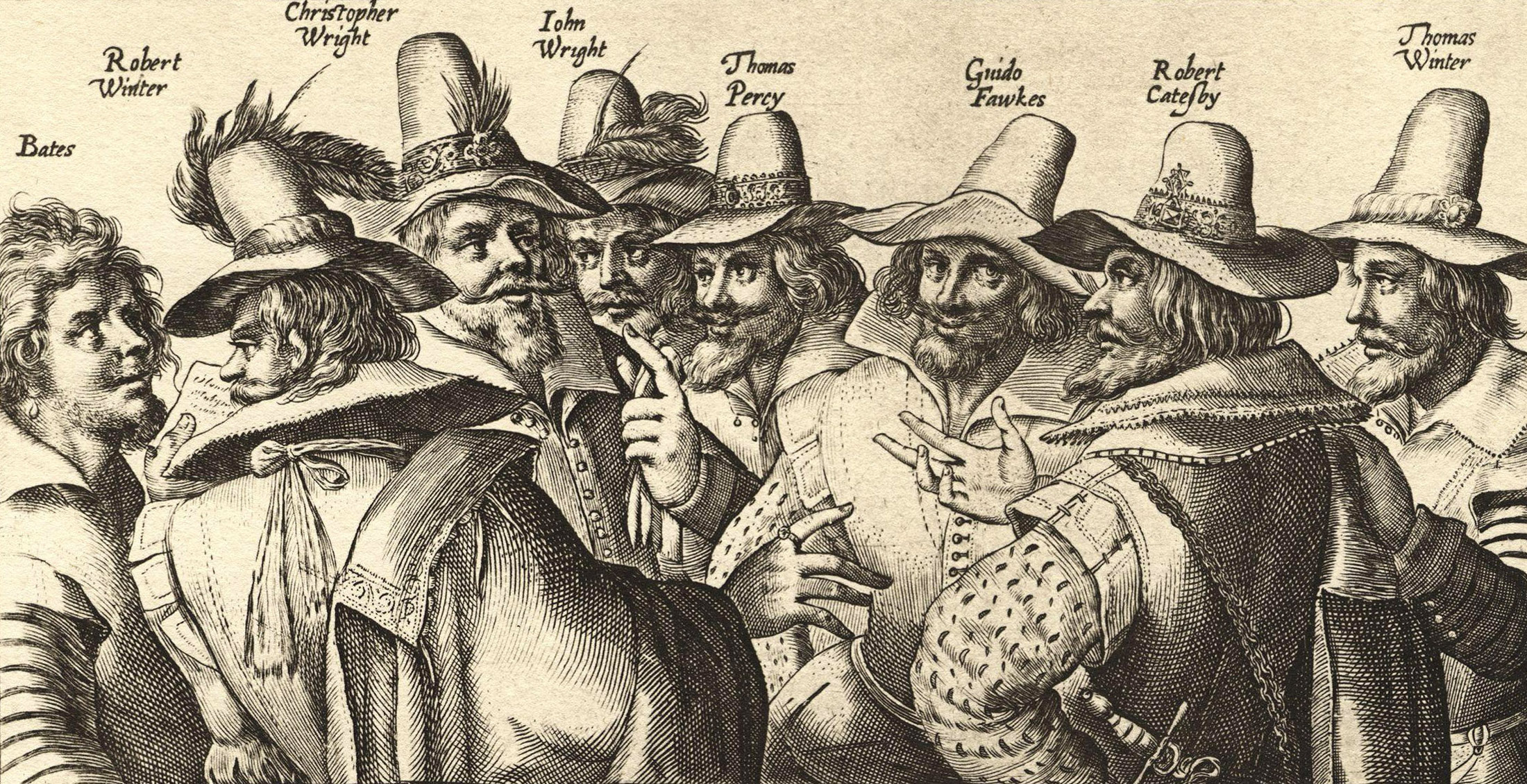
This is England's bonfire-and-firework night. On the fifth of November 1605 terrorist plotters:

File:Gunpowder Plot conspirators.jpg

 tried to blow up the Houses of Parliament. The dastardly dark deed was discovered just in time, saving many lives.

We're still celebrating, hundreds of years later.

Why? 

I think the clue's in the rhyme.

No, not the gunpowder, and not the treason: it's the plot that gets us. It's the plot that catches our attention and makes a home so satisfyingly in our minds. 

Of course books without plots are reckoned rather clever at the moment, but as far as I'm concerned they're like a car without wheels: beautiful, interesting and intricate, perhaps - but not going anywhere at all.

Now, don't you want to know more about the Gunpowder Plot

Of course you do.

You can find all about it HERE

Word To Use Today: plot. This Old English word means piece of land. It's probably come to mean story partly because of the Old French complot, which means conspiracy.


Tuesday, 4 November 2014

Thing Not To Do Today: gerrymander.

Who is the greatest children's author in the English-speaking world, ever?

Well, let's have a vote.

Okay, everyone, hands up: who is the greatest children's writer in the English-speaking world, ever?

What's that you say, madam? You're voting for E Nesbit, while muttering under your breath that it's a stupid and unanswerable question anyway?

Well, thank you very much. So there we are, ladies and gentlemen. We've had a free and fair vote, and E Nesbit has proved to be the greatest children's writer in the English-speaking world, ever.

It's true that the people qualified to vote were limited to those in the loft in which I'm presently typing, and, yes, the population of this room is presently, well, me, but it was a free and fair vote, as nobody can deny.

Gerrymandering: that is, drawing boundaries before a vote to make sure you get the right answer.

Eight out of ten cats are all for it.

Thing Not To Do Today: gerrymander. This word was used for the first time in the Boston Gazette on 26 March 1812. Governor Elbridge Gerry had redrawn the boundaries for the Massachusetts Congressional Districts to help his own cause, and one of the boundaries was so curvy some people said it looked like a salamander.


Monday, 3 November 2014

Spot the Frippet: drysalter.

When was the last time you saw a drysalter?

Until, ooh, about thirty seconds ago, I would have denied all knowledge of drysalters. No, I would have said, I have never met, seen, or had dealings with a drysalter of any kind.

But the truth was that I didn't know if a drysalter was a person, or one of those weird things painted in stripes that you see at the seaside and which I have always assumed were something to do with the restraining of large vessels.

But splendidly nautical though drysalter sounds, a drysalter is nothing particularly to do with the seaside. He neither cures herring nor tends to boats in dry dock.

In fact, wherever you live, there is a drysalter near you. You depend on him for your chips, whether of the US or British variety; you depend on him for your baked beans and your pickled onions; and your football scarf would be a thing of pathetic pale timidity without him.

So who are they?

A drysalter is a dealer in the chemicals used in the arts, drugs, dyestuffs and gums; in dried, salted, pickled and tinned foods; and in edible oils.

And if I had known earlier that such a profession existed, I might have become one myself, just for the glory of bearing its name.

Pommes-1.jpg
My sort of chips.

Spot the Frippet: drysalter. This word seems first to have been used in the early 1700s. The word salt comes from the Old English sealt and goes all the way back to the Greek hals.


Sunday, 2 November 2014

Sunday Rest: genuflect. Word Not To Use Today.

There's nothing wrong with genuflecting, which is the sort of upright curtsy done by some people if they need to pass in front of an especially holy bit of a church.

A genuflecter may possibly come over as a bit of an exhibitionist, and it's certainly hard on the knees, but. hey, if that's what people want to do...

Nevertheless, the word itself is horrible.

Genuflect. It sounds like a technical term for a stomach complaint. Why can't there be a nice simple old word for paying respect to God in this way?

It's enough to make one wonder if genuflecting was originally a rather unEnglish form of showing off.

Word Not To Use Today: genuflect. This word comes from the late Latin genuflectere, from Latin genu knee and flectere to bend. It was first used in English in 1630.


Saturday, 1 November 2014

Saturday Rave: Do not go gentle into that good night by Dylan Thomas.

Dylan Thomas was born just about a hundred years ago.

Here:

On a hill street stands a two storied semi-detached house with bay windows to the front and a sloped tiled roof with a chimney.

That's 5, Cwmdonkin Drive, Swansea. The double disadvantage of firstly being born in a place called Cwmdonkin Drive and secondly being called Dylan (traditionally pronounced dull'n in Wales) would be enough, one would think, to put paid to any ambitions towards poetry in all but the madly determined and quite probably drunk.

But then Thomas was both of those.

Thomas produced a tremendous amount of work, eighty per cent of it, astonishingly, before the age of twenty. He's famous for having died on a visit to New York after having drunk a lot of whisky (exactly how much whisky is disputed). He was certainly ill at the time, as well as drunk, and the smog of New York can have done nothing to help his chronically bad chest.

However ill he was, he did a lot of work in those last few days, as well as a lot of drinking.

...Wild men who caught the sun in flight,
And learn, too late, they grieved it on its way,
Do not go gentle into that good night...

Dylan Thomas was never wealthy. In fact he wasn't often out of debt. It's hard to argue that he lived wisely, or happily, or that he made the people around him happy, either.

I think the fact that this post is appearing on All Saints' Day would have amused him greatly.

Oh, but his life was lived, right to the end, all the same.

Do not go gentle into that good night...

Word To Use Today: gentle. This word comes from the Old French gentil, noble, from the Latin gentīlis, belonging to the same family, from gens, race.