This blog is for everyone who uses words.

The ordinary-sized words are for everyone, but the big ones are especially for children.


Friday, 5 December 2014

Word To Use Today: dap.

Here's a bright, bouncing little word.

Dap has meanings to do with angling, birds, and athletics, and it's the bouncing that's important.

In angling, to dap is to use a fly (it can be a real or an artificial one) tied to a very light silk line, so that the wind makes the fly bob on and off the surface of the water.

When a bird daps, it's dipping lightly into water. In England you might see a dapping wagtail, or, even more pleasingly, in rocky places you might even see a dapping dipper.

File:Young dipper on River Breamish - geograph.org.uk - 220396.jpg
Photo: Tim Walter


Children love to dap, too. This might involve dapping like a dipper, but it might mean bouncing, either a bouncing a ball or the whole body. It's easier when you're small, when gravity hasn't got such a hold on you, but a quick bounce at any age adds to the gaiety of the world.

(By the way, the ideal footwear for dapping are daps, which in Southwest England are plimsolls, a sort of light canvas trainer-type shoe.)

If you're really too heavy for dapping, then how about a dap greeting, which is a fist bump?

If the thing bouncing is a hammer and it's beating a sheet of metal into the shape of the mould underneath it then that's dapping, too.

A dap is also an Iranian drum:


As an acronym, DAP can be a Draw-a-Person test, which measures the abilities and emotional states of young children; a fertiliser; a flame-retardant; and a Dog Appeasing Pheromone, as well as loads of things to do with computers.

But for me, you know what? I'm going to stick with the bouncing.

Word To Use Today: dap. This word turned up in English in the 1600s, probably as an imitation of the sound of something small dropping into water.


Thursday, 4 December 2014

As long as he's reading: a rant.

'As long as he's reading,' parents say.

What they mean is: as long as he's reading then he'll probably scramble himself into enough education to survive in the Big Wide World.

And, do you know something? They're probably right. Professor Alice Sullivan, lead author of a report from the Institute of Education at London University, has published a thirty two year study (that's thirty two years so far - I do hope they haven't given it up) and it's found that avid childhood readers have far larger vocabularies than those who never read for pleasure, and that this effect carries on right into middle age.

(Yes, I'm assuming here that knowing lots of words helps with surviving in the Big Wide World.)

So far, so predictable. But the report came up with another finding that was particularly interesting.

The IOE study looked at the types of thing people were reading, and measured the effect that had on vocabularies, too.

The greatest improvement between the ages of 16 and 42 was made by people who read literary 'highbrow' fiction.

Readers of quality newspapers made the next biggest improvement, and they, again predictably, learnt quite a lot more words than those who read no newspaper at all.

But - and this is the intriguing bit - the people who did worst of all in vocabulary tests at the age of 42 were those who read low-quality 'tabloid' newspapers.

I suppose the last thing a tabloid newspaper does is foster curiosity and intellectual exploration, so I suppose this shouldn't really be much of a surprise.

But what does this mean for all those parents who take comfort in the oh-so-easy as long as he's reading?

I think it means they should take up a different slogan: variety is the spice of life.

Word To Use Today: tabloid. This rather nasty word denotes a small-sized newspaper with a sensational style. The word was coined in the 1900s as a trademark for a medicine in tablet form.

Wednesday, 3 December 2014

Nuts and Bolts: chunking.

The other day I came across a proofreadbot page that contained a short essay on sentence-length.

'Most professional editors and textbook writers try to maintain an average sentence length of 15 to 20 words. This ideal size range is based on chunking and human memory principles, and some sentences will be longer than 20 words. In academic texts for example, you may have sentences of 30 or 35 words.

Try to break up long sentences (more than 35 words) to smaller ones, and join short sentences (less than 10 words) to neighboring sentences with a coordinating or a subordinating conjunction.'

Well, the first thing that struck me was the less than 10 words bit (fewer words, ideally, and please spell out the word ten). Then I sniffed rather about the lack of a comma after texts, and decided that it should be into, not to, before smaller.

But aftre that I found myself wondering what chunking was, because it sounds perfectly scrummy.

And, well, I don't know if chunking is lovely, exactly, but it is interesting. Chunking is the idea that a group of words are sometimes processed in the brain as a single idea. An example might be a phrase like once upon a time, or cover to cover.

Chunks are used all the time. Sometimes small children learn chunks and only later split them up into words: oh dear!

When is a chunk not a chunk? Well, in it broke the ice, it rather depends whether the ice was broken by a joke or an axe.


photo: wikimedia commons

In any case, from now on the idea of chunking has changed my whole attitude to words.

So thanks to proofreadbot for that, at least.

Word To Use Today: chunk. My Collins dictionary says that this is a variant of CHUCK. The entry under CHUCK says it's a variant of CHOCK. And CHOCK is apparently of uncertain origin,

Grrrr...

...though the dictionary does mutter something about the Provenรงal word soca, which means tree stump.

Chunk and chunking were introduced as language terms by the psychologist George A. Miller in his 1956 paper "The Magical Number Seven, Plus or Minus Two: Some Limits on Our Capacity for Processing Information".
 

Tuesday, 2 December 2014

Thing To Do Today: be flabbergasted.

"I'm flabbergasted," the comedian Frankie Howerd used to say. "Never has my flabber been so gasted."

I neither know what flabber is, nor how one could gast it, but to be flabbergasted is to be overcome with astonishment - and how could any day fail to flabbergast in such a world as ours?

A world where some types of Tarantula can shoot the hairs out of their bodies to spear their enemies.

A world where most lipsticks contain fish scales.

A world where a baby is born with about 270 bones, but an adult has only 206.

A world where, of all the true facts in the universe, no one knows more than a vanishingly tiny fraction of them...

...and the vast majority of those will sooner or later turn out to be wrong.

Hm. I don't suppose anyone out there does know what flabber is, do you?

Thought not.

Thing To Do Today: be flabbergasted. This word appeared as fashionable slang in the 1700s but no one is sure from whence it came. There are similar words recorded from Suffolk, where it meant to boast, and Perthshire, where it meant to be worn out with exhaustion, but as they are both the wrong thing my guess is that flabberghast was probably just made up for fun.

And it is, isn't it.

Monday, 1 December 2014

Spot the Frippet: bisque.

People come from all over the world to play in The World Den, and sometimes it's difficult to find a word that's suitable whether you're in the scorching summer of Sydney or the windy winter of Wisconsin.

But here's one: bisque.

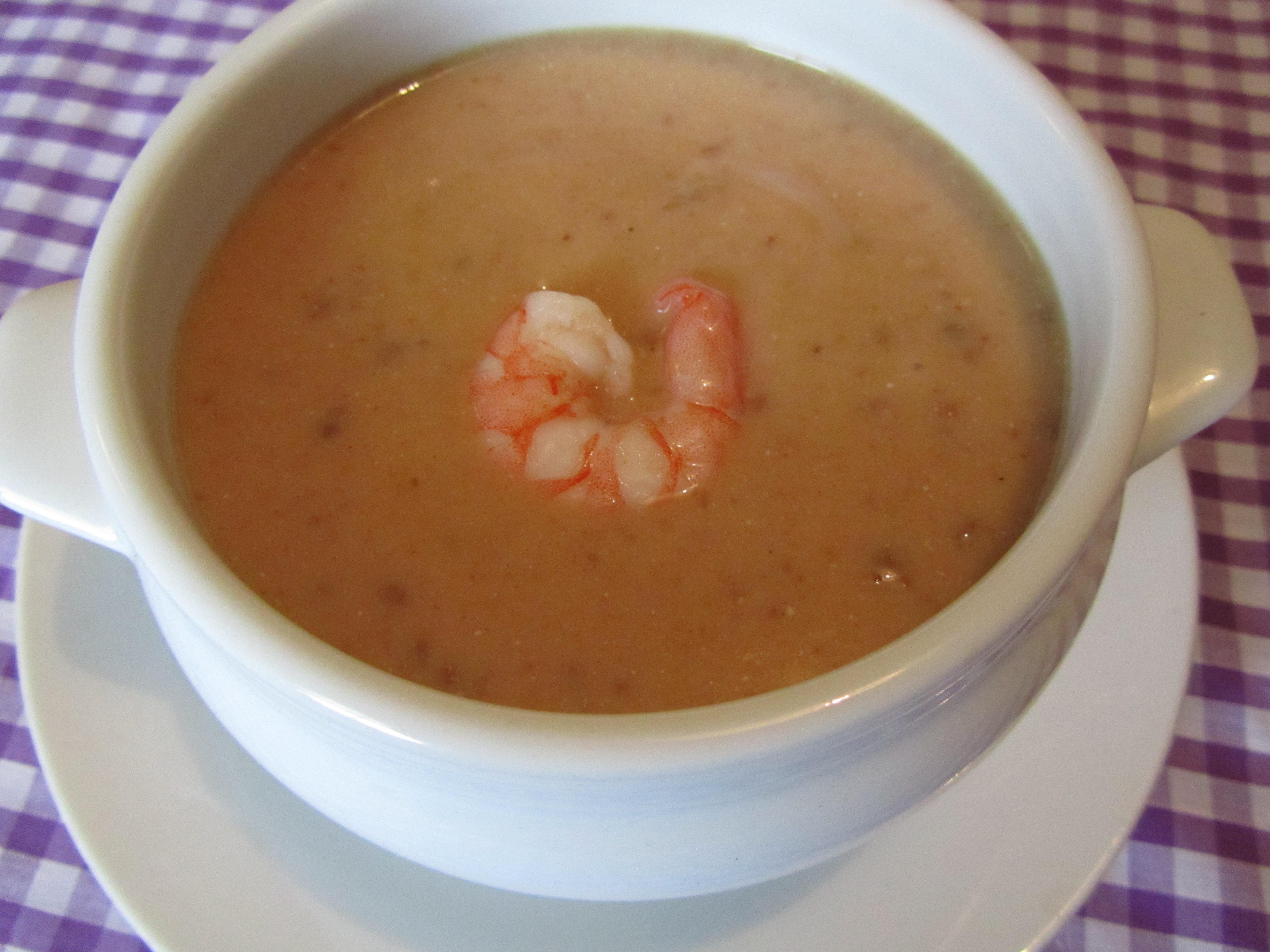
Bisque can be a warming shellfish soup made extra delicious with wine and cream (oh rats, I'm getting hungry, and it's at least nine hours until dinner).

File:Shrimp Bisque.jpg
Photo: French Recipes

If, however, the sun is blazing down and the last thing you need is a bowl of steaming soup, then you can head outdoors to play tennis, croquet or golf:

The Heart of a Goof

In those sports a bisque is a free point, stroke, or go given to a weak player. It can usually be taken whenever things are looking particularly hopeless, too.

But there's no need to despair even if you're somewhere warm but raining, because there's always the bisque which is either a pink or yellowish tan colour, or fired but unglazed porcelain or earthenware. That sort of bisque is used a lot for china dolls.


So there we are. Something that unites the world in a happy diversity.

And how many of those can you find about the place?

Spot the Frippet: bisque. The soup word is French, It may be named after the Bay of Biscay, but the shellfish are certainly bis cuites - twice cooked - (fried, then simmered) so it might be something to do with that. The free stroke for incompetents is French, too, and probably started out as a croquet term. The colour and ceramic meanings are a shortened form of biscuit.


Sunday, 30 November 2014

Sunday Rest: bismuthous. Word Not To Use Today.

Let's face it, it's almost impossible to say bismuthous even if you want to, so this shouldn't cause too many problems.
 
See? Not easy, is it?
 
Now try big bismuthous thief.
 
Bismuthous, as you will have realised, means to do with bismuth. And what's bismuth? It's a very very slightly radioactive (its half-life comes out as about a billion times the age of the universe) metallic element.


This neat image is from Wikipedia showing artificially grown bismuth crystal in a stairstep crystal structure, with a 1 cm3 cube of bismuth metal beside it.
 
Bismuth is not all that widely used, but it's been found useful in diarrhoea cures, to cure eye infections, and as an "internal deodorant", a thing of which I really wish to know as little as possible.
 
You can make a bismuthous pearly-looking pigment which is used in cosmetics. It's also used as a less-toxic substitute for lead in casting, toy soldiers, ammunition, and water systems.

Bismuthous is technically restricted to describing bismuth in the trivalent state.

Unfortunately bismuth's trivalent state is the common one.

Word Not To Use Today: bismuthous. No one's quite sure whether this word comes from  the Arabic bi ismid, having the properties of antimony, or the German weisse masse, white mass, later Latinised to bisemutum.


Saturday, 29 November 2014

Saturday Rave: The Name, by Steve Wadsworth.

Selby is a town in North Yorkshire, England.

It was founded by the Vikings (as you can tell from the by at the end of its name) on the banks of the River Ouse.

Selby has a magnificent abbey:

SelbyAbbey.JPG

and, although Selby may not have made the biggest impact on world affairs, don't be deceived into thinking it's a sleepy backwater. Nothing could be further from the truth.
 
Selby District Council (Your 'Excellent' Council) is building a new Leisure Centre.

Now, the old one was called after the abbey (see above), but obviously some new and thrusting appellation was required for the new building, and so a competition was launched to find one.

The excitement has been intense, but now I can bring to you the result of the competition, as announced in Selby District Council's newsletter.

'The winner of the exciting competition to name the new leisure centre in Selby has received the prize of a year’s free membership from leisure provider WLCT.

Steve Wadsworth chose the name Selby Leisure Centre for the facility, which is set to open in Spring 2015.'

So there we are: concise, clear, and comprehensible.

I vote for Steve Wadsworth as a Language Hero of our time.

Word To Use Today: leisure. This word comes from the Old French leisir, and before that from the Latin licฤ“re, to be allowed.