This blog is for everyone who uses words.

The ordinary-sized words are for everyone, but the big ones are especially for children.


Thursday, 7 April 2016

As if! a rant.

When did I go wrong? 

When was the moment when an acceptable grammatical form became an unacceptable one?

I'm talking, as I have before, about as if.

I used to be able to describe the world as if I were an elf. Now I have to describe the world like I was an elf.

Says who?

Say two large and respected English publishers. 

The latest instance involved, admittedly, a speech by a troll, so on the whole I think that's probably fair enough. Trolls are, as you'll know, notoriously lax about their personal hygiene, the source of their protein intake, and their grammar.
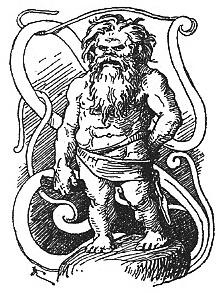
Singular dwarf by Frølich

The other example, though, was part of a blurb on the back cover of a book. It said like, I suggested a change to as if, but apparently as if was too formal.

So when did I go wrong? Will someone soon be going through Austen and Wodehouse, and updating their grammar..? Will we end up with: Jeeves lugged my purple socks out of my drawer like he was a vegetarian fishing a caterpillar out of his salad? 

...actually, I'd better keep quiet about that idea - or some idiot will.

Word To Use Today...one that was right once. My grandmother used to speak of receipts when the rest of us said recipe. I rather liked it.

File:Whisky Sour Recipe.jpg
Photo by MorrisBarPeru


Wednesday, 6 April 2016

Nuts and Bolts: signal flags

Admiral Nelson is famous for putting his telescope to his blind eye so he could claim not to have seen an order, relayed by flags, from his commanding officer.

Fortunately for him, that adventure turned out rather well.

You'd think that in this age of advanced telecommunications signal flags would have gone out of use, but they're still widespread, important, and even in some cases obligatory. This one, for instance:

ICS Victor.svg

means I require assistance.

ICS Alpha.svg

means I have a diver down; keep well clear at slow speed.

ICS Foxtrot.svg

means I am disabled; communicate with me.


These flags are also the V, A and F flags, respectively, and they can also either be used to spell out messages, or they can be used in combination as a code message.

There have been, and are, several languages of ship flags. There are special codes for NATO warships, and others for racing yachts and fishing vessels.

This message:


is one which Nelson himself sent before the battle of Trafalgar: England expects that every man will do his duty. This message is in Sir Home Riggs Popham's Telegraphic Signals of Marine Vocabulary. As you can see, all the words are available in code except for DUTY, which has to be spelled out one letter at a time.

Finally, here's an example of a message consisting of the three alphabet flags we started with. Here it's been made to be worn as a brooch.

The letters, as we saw above, are AVF, but the signal when combined?

Code Flag Brooch
Permission to lay alongside.

Thing To Consider Today: what message your own badge might say. The word signal comes from the French seignal, and before that from the French signum, sign.

Tuesday, 5 April 2016

Thing To Do Or Be Today: brachiate

I love words that pop up with two or more completely different meanings.

Brachiate can mean to swing from branch to branch like an ape or monkey (I do heartily recommend this).

File:Brachiating Gibbon (Some rights reserved).jpg
Photo of a gibbon by Troy B Thompson

If you're feeling particularly fit you could try ricochetal brachiating, which involves a bit of flying between letting go of one branch and grabbing hold of the next.

 Brachiate can also mean having widely divergent paired branches, but I fear you can only really be this if you're a plant. 

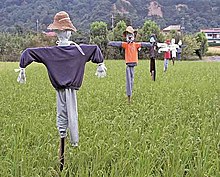
Or a scarecrow, I suppose.


These are in Japan

That must be the least exhausting option.

Thing To Do Or Be Today: brachiate. This word comes from the Latin brachiatus, from brachium, arm or branch.


Monday, 4 April 2016

Spot the Frippet: something brutalist.

I've always assumed that brutalist architecture was, well, brutal.

And, often, it is:


File:Jugotours Beograd Dec 2003.jpg
Western Gate of Belgrade in Novi Beograd, previously called Jugotours, now Genex Tower. Photo by Blago Tebi

But the connection between brutalism and feeling crushed and intimidated by a building is coincidental, because the word brutalism comes from the architect Le Corbusier's term beton brut, which means raw concrete.

So something brutalist can be quite small (if still not necessarily all that welcoming):

Bus shelter on Lewis. Photo by Tom Richardson [CC BY-SA 2.0], via Wikimedia Commons
This is a bus shelter on the Isle of Lewis. Photo by Tom Richardson

It can even verge towards the ornate:

File:Brutalism in Orminge at Boo vårdcentral.jpg
Boo várdcentral in Orminge, Nacka, Sweden

My eyes newly opened, I'm going to spend some time today admiring concrete.

Well, I'm going to try, anyway.

Spot the Frippet: some concrete. The word brutal comes from the Latin brūtus, heavy or irrational.


Sunday, 3 April 2016

Sunday Rest: gerontic. Word Not To Use Today.

Gerontic means to do with lives that are coming to an end.

(My dictionary says relating to the senescence of an organism, but it comes to the same thing.)

But, look, I know there are plenty of crotchety old organisms out there, but gerontic is a horrible word to describe them, a awkward arthritic limp of a word without the slightest respect or compassion in it.

File:Vincent van Gogh - Old Man in Sorrow (On the Threshold of Eternity).jpg
Old Man in Sorrow (on the Threshold of Eternity) by Vincent Van Gogh.

Let's be more tender to old age. After all, we'll get there ourselves before too long.

If we're lucky.

Sunday Rest: gerontics. This word comes from the Greek gerōn, old man.


Saturday, 2 April 2016

Saturday Rave: Germinal by Emile Zola.

The great and prolific novelist Emile Zola's fame rests far too much on just one and a half words: J'accuse.

And that doesn't come from one of his novels.


ZOLA 1902B.jpg

So, Zola. 

You know those people who are effortlessly successful at everything they do? Well, Zola wasn't one of them. He failed the exams he needed to get into Law School, and then worked as a clerk (he ended up running the publicity department of the publisher Hachette) while writing reviews and being less than enthusiastic about the man who was first president, then emperor, of France, Napoleon III (those were interesting times).

Zola was interested in writing realistically (perhaps his passion for photography was linked with this) and half his novels (that's about twenty) form the Rougon-Macquart series about the lives of two families in the mid 1800s. Most of the books are set in Paris, but Germinal is set in the poverty-stricken mining villages of Northern France.

Germinal is an amazing read. It reminded me of DH Lawrence to begin with, but the society of Village 240 makes Lawrence's people look positively soft, straight-laced and pallid. Above all, if there's a book that demonstrates that the human spirit will survive (though not unscathed) in conditions close to those of Hell, then this is it.

Do you like dystopian books? Well, Germinal presents a truly horrifying dystopia which claims, at least, to be as close as a novel can get to reality. It addresses issues of politics, class, progress, mechanisation, heredity and sexual equality. 

And it's a simply tremendous read.

Word To Consider Today: Germinal. Germinal was the name of the seventh month of the French Revolutionary Calendar, which was in Spring. The word is connected with germination, which comes from the Latin germen, bud. 


Friday, 1 April 2016

Name To Use Today: Boaty McBoatface.

First of all, it not being my intention to mislead anyone, please look at the date of this post.

Okay?

All right, now we'll begin. 

The Natural Environment Research Council (NERC) has asked the public for suggestions for naming its new state-of-the-art £200 million, 15,000 tonne, 128m research vessel, to be launched in 2019. 

The new ship will replace RSS Ernest Shackleton and RSS James Clark, and NERC, who are looking for another inspirational name, had expected only marine-research fans to become involved in the naming process. 

Instead the competition has caught the imagination of the British public.

Naturally some undignified and mischievous names have been put forward: It's bloody cold here, Ice Ice Baby and Notthetitanic, for instance, but easily overtaking these in front place with over 27 000 votes is Boaty McBoatface.

Here's the ship:


NERC.JPG
"Boaty McBoatface"

Now, I hope you've been keeping the date of this post in mind, because this post is of course an April Fool.

No, really, it was: because every word of the story of NERC and Boaty McBoatface is absolutely and completely...

...true.

Name To Use Today: Boaty McBoatface. This name was made up by James Hand, a former BBC presenter, who is mortified at his light-hearted suggestion taking off and says he has apologised profusely to NERC. 'It's got legs of its own,' he said.

NERC claim to be delighted at all the publicity.
In second place in the poll is RSS Henry Worsley. Henry Worsley died in January attempting the first solo unsupported and unassisted crossing of the Antarctic.

Which would you choose?

    T