Reasons for not using the word mesial:
1. Only dentists will understand it.
2. It sounds like a slightly up-market version measly, which will mislead anyone gamely trying to guess what on earth you're going on about.
3. It is in fact a synonym for medial, so you might as well use that, as it is much more guessable and you might even pass as a scientist or mathematician.
4. Even better, you could use the phrase in the middle, which means the same thing in most circumstances (except dentistry, where it means towards the middle).
5. Well, you don't want to look like a dork, do you.
Word Not To Use Today: mesial. This word comes from the Greek mesos, which means middle.
Sunday, 9 October 2016

Saturday, 8 October 2016
Saturday Rave: From a Railway Carriage by Robert Louis Stevenson.
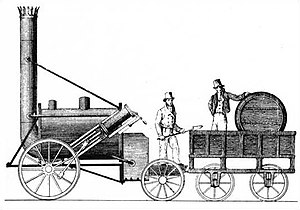
Today is the anniversary of the Rainhill Trials, which took place in Northern England in 1829 to decide upon the best design for a steam locomotive.
The trials were won by Robert Stevenson's The Rocket, an engine which cleverly integrated several existing engineering ideas, and proved to form the basis for steam engine design for the next 150 years.
Hurrah!
(You can still see The Rocket at the Science Museum in London.)
In celebration, here's a wonderful poem by another Robert Stevenson, this time Robert Louis. It comes from A Child's Garden of Verses, and it was the poem that first made me notice that words can have such a thing as rhythm.
In those days railway tracks were made in fairly short lengths joined together, and the wheels of the carriages clicked as they travelled over the joins: diddle-dee DAH, diddle-dee DAH, they went.
Or, to be more elegant about it, they made a noise rather like this:
From a Railway Carriage
Faster than fairies, faster than witches
Bridges and houses, hedges and ditches;
And charging along like troops in a battle,
All through the meadows the horses and cattle:
All of the sights of the hill and the plain
Fly as thick as driving rain;
And ever again, in the wink of an eye,
Painted stations whistle by.
Here is a child who clambers and scrambles,
All by himself and gathering brambles;
Here is a tramp who stands and gazes;
And there is the green for stringing the daisies!
Here is a cart run away in the road
Lumping along with man and load;
And here is a mill and there is a river:
Each a glimpse and gone forever!
It's rather nonsense, of course: but then who can bear to be entirely sensible when you're going along very fast on a steam train?
Word To Use Today: steam. This word is Old English. It might be related to the Old High German stioban, to raise dust.
Friday, 7 October 2016
Word To Use Today: fingerspitzengefuhl
I came across this word for the first time just last week in an article about economics.*
Fingerspitzengefühl. (The first g sounds like the g in singer, the second g like the one in get, and the word ends up fool.)
This is a German word, obviously, and it means...well, it means Fingerspitzengefühl, and the fact there isn't an English word for it is the reason why English has pinched it.
Fingerspitzengefühl partly describes having your finger on the pulse of a situation (it might be used of a general in a battle, or of a very skilled footballer). It means being able to react instinctively and effectively to any developing situation. But there's also an idea of tact and sensitivity, too (not something usually connected with either generals or footballers in full flow).
I suppose fingerspitzengefuhl means being so much on top of a situation that you have some attention left over to keep the troops happy.
It's interesting, isn't it, that German has a word for that sort of thing and English hasn't needed it until now. But whether that's down to incompetence, lack of respect, or modesty, I leave it to yourself to determine.
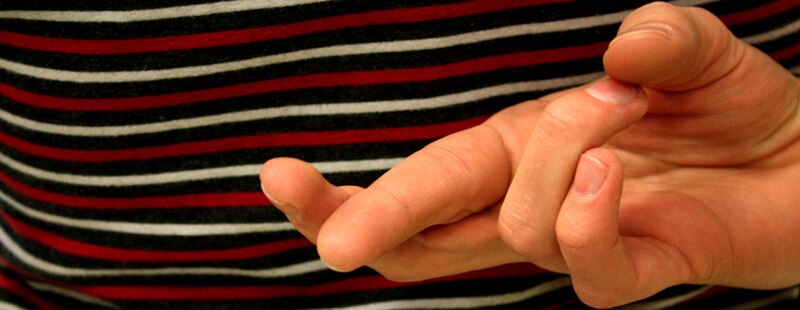
photo by Mjt16
Word To Consider Today: Fingerspitzengefühl. This word comes from the German words Finger, which means, yes, finger, Spitze, tip, and Gefühl, which means feeling.
*I love reading articles about economics, even though I don't understand what they're on about most of the time and I'm not even really interested in economics.
I suppose that must make sense in some way, but if it does I don't know how.
Fingerspitzengefühl. (The first g sounds like the g in singer, the second g like the one in get, and the word ends up fool.)
This is a German word, obviously, and it means...well, it means Fingerspitzengefühl, and the fact there isn't an English word for it is the reason why English has pinched it.
Fingerspitzengefühl partly describes having your finger on the pulse of a situation (it might be used of a general in a battle, or of a very skilled footballer). It means being able to react instinctively and effectively to any developing situation. But there's also an idea of tact and sensitivity, too (not something usually connected with either generals or footballers in full flow).
I suppose fingerspitzengefuhl means being so much on top of a situation that you have some attention left over to keep the troops happy.
It's interesting, isn't it, that German has a word for that sort of thing and English hasn't needed it until now. But whether that's down to incompetence, lack of respect, or modesty, I leave it to yourself to determine.
photo by Mjt16
Word To Consider Today: Fingerspitzengefühl. This word comes from the German words Finger, which means, yes, finger, Spitze, tip, and Gefühl, which means feeling.
*I love reading articles about economics, even though I don't understand what they're on about most of the time and I'm not even really interested in economics.
I suppose that must make sense in some way, but if it does I don't know how.
Thursday, 6 October 2016
Children. nowadays: a rant.
One of my books has just been through the editing stage.
No, no, it could have been much worse, thank you. No one said I think it might work better if the central character was a fork-lift truck; or it'd be great if you could just cut fifty thousand words; or is it all right if we make all the characters gorillas?
No, nothing like that. The trouble was caused, not by the editors, for once, but by the flipping children.
The book is aimed at young people aged about eight to eleven, and to my shock I've discovered that children of that age can't be exposed to the words subside, fervently or quest in case their poor brains melt from sheer incomprehension.
I know, I know, that's what I thought: however are they going to learn new words if...
Ah well, never mind. Children are obviously a bit more protected and spoon-fed than they used to be. Times have changed, educational theories have matured, innocent little children are to be treated with the utmost respect...
...and then I got to the bit in the book where a kid says I feel as if I've got crabs in my ears, and found another editorial note:
Please make it clear that these are the sea-side kind of crabs, and not the disease, it said.
What???
So you mean the children know...but don't know...
Well, honestly.
Children, nowadays.

photo of Barbados land crabs by SARBAJIT SARBAJNA
Word To Use Today: one unsuitable to use in front of children. Quest, for instance, comes from the Old French queste, from the Latin quaerere, to seek.
No, no, it could have been much worse, thank you. No one said I think it might work better if the central character was a fork-lift truck; or it'd be great if you could just cut fifty thousand words; or is it all right if we make all the characters gorillas?
No, nothing like that. The trouble was caused, not by the editors, for once, but by the flipping children.
The book is aimed at young people aged about eight to eleven, and to my shock I've discovered that children of that age can't be exposed to the words subside, fervently or quest in case their poor brains melt from sheer incomprehension.
I know, I know, that's what I thought: however are they going to learn new words if...
Ah well, never mind. Children are obviously a bit more protected and spoon-fed than they used to be. Times have changed, educational theories have matured, innocent little children are to be treated with the utmost respect...
...and then I got to the bit in the book where a kid says I feel as if I've got crabs in my ears, and found another editorial note:
Please make it clear that these are the sea-side kind of crabs, and not the disease, it said.
What???
So you mean the children know...but don't know...
Well, honestly.
Children, nowadays.
photo of Barbados land crabs by SARBAJIT SARBAJNA
Word To Use Today: one unsuitable to use in front of children. Quest, for instance, comes from the Old French queste, from the Latin quaerere, to seek.
Wednesday, 5 October 2016
Nuts and Bolts: horse sense.
Some scientists in Norway have just taught some horses to read.
No, really, it's properly true - and Cecilie M Meidel, Turid Buvik, Grete H M Jørgensen and Knut E Bøe of the Norwegian Veterinary Institute have got a good result with every single animal in their experiment, too. Twenty three horses, twenty three newly-literate animals - and this after just ten to fifteen minutes of training every day for a couple of weeks.
Good grief, not all teachers of human animals can claim as much.
The result is that now the horses can tell their humans whether they want to wear a blanket or not by touching a symbol on a board (the horses were placed in variously cold and warm places to check that the horses understood what they were asking).
There were three symbols for the horses to choose from: blanket on (horizontal line) blanket off (vertical line) and no change (blank symbol...which I presume means no symbol at all).
The results of the study were published in the Applied Animal Behaviour Science journal, and it says on their website that horses of the warm-blooded type (the sort bred for jumping and sport) were quicker learners than the cold-blooded type (heavy draft animals).
Now, it's nice the horses can be made properly comfortable, but the next and most important question must be: what do we really want to ask a horse?

photo by Julian Berry
Word To Use Today: horse. This word was hors in Old English.
No, really, it's properly true - and Cecilie M Meidel, Turid Buvik, Grete H M Jørgensen and Knut E Bøe of the Norwegian Veterinary Institute have got a good result with every single animal in their experiment, too. Twenty three horses, twenty three newly-literate animals - and this after just ten to fifteen minutes of training every day for a couple of weeks.
Good grief, not all teachers of human animals can claim as much.
The result is that now the horses can tell their humans whether they want to wear a blanket or not by touching a symbol on a board (the horses were placed in variously cold and warm places to check that the horses understood what they were asking).
There were three symbols for the horses to choose from: blanket on (horizontal line) blanket off (vertical line) and no change (blank symbol...which I presume means no symbol at all).
The results of the study were published in the Applied Animal Behaviour Science journal, and it says on their website that horses of the warm-blooded type (the sort bred for jumping and sport) were quicker learners than the cold-blooded type (heavy draft animals).
Now, it's nice the horses can be made properly comfortable, but the next and most important question must be: what do we really want to ask a horse?
photo by Julian Berry
Word To Use Today: horse. This word was hors in Old English.
Tuesday, 4 October 2016
Thing Not To Be Today If You're A Man: foxy.
Foxy means like a fox. Well, sometimes it means like a fox, anyway.
Foxy paper, for instance, is stained red-brown by the action of mould; foxy wine tastes of the fruits of the wild Northern American plant Vitus labrusca, which are also known as fox grapes; foxy oats have a musty smell from having got wet, gone a bit off (spoiled, for US readers) and then dried out again.
But what about a foxy person?
Well, it depends, doesn't it. A foxy man is cunning (like a fox) but a foxy woman is alluring...
...and what that's got to do with foxes (apart from their beauty) I have absolutely no idea.
So: is the male-female foxy dichotomy hugely sexist? Or merely utterly delightful?
Well, as the woman comes out best in this particular comparison, I, for one, am not complaining.
Thing Not To Be Today If You're A Man: foxy. A fox has been called a fox in England since before the Norman Conquest. The word's origins can be traced right back to the Sanskit puccha, which means tail.
Monday, 3 October 2016
Spot the Frippet: raft.
A raft is a simple thing. Anyone could make one, or extemporise one, and so in theory an adventure down the river on a raft is never far away.
Perhaps that's why rafts are fascinating.

photo by Yuval Haimovits
But where to spot one? Well, I suppose any river or puddle might support a leaf acting as a raft to some small creature. When I was very small the Tropical House at Kew Gardens in London contained (and perhaps still does) giant water lily leaves that were said to support the weight of a five-year-old (though, sadly, I was never allowed to find out if it was true).
A large floating area or collection of anything is a raft, whether it is ice, or weeds, or drifting wood, or water birds.
A raft can actually be a large collection of anything, though if it's away from water this raft is at root an entirely different word. A cupboard might contain a raft of baking trays, or a government might launch a raft of laws, Books also sometimes come in rafts. But, although this raft is at root entirely different from the boat sort of raft, the meanings have got a bit muddled over the centuries and now even this sort of raft tends to describe the sort of thing that's launched or is flat enough to float.
I could imagine a raft of sandwiches, for instance, but not a raft of doughnuts...
...unless, I suppose someone had sat on them.
Spot the Frippet: raft. The floating word comes from the Old Norse raptr, which means rafter. The collection word comes from the Old French rafle, a snatching up.
Perhaps that's why rafts are fascinating.
photo by Yuval Haimovits
But where to spot one? Well, I suppose any river or puddle might support a leaf acting as a raft to some small creature. When I was very small the Tropical House at Kew Gardens in London contained (and perhaps still does) giant water lily leaves that were said to support the weight of a five-year-old (though, sadly, I was never allowed to find out if it was true).
A large floating area or collection of anything is a raft, whether it is ice, or weeds, or drifting wood, or water birds.
A raft can actually be a large collection of anything, though if it's away from water this raft is at root an entirely different word. A cupboard might contain a raft of baking trays, or a government might launch a raft of laws, Books also sometimes come in rafts. But, although this raft is at root entirely different from the boat sort of raft, the meanings have got a bit muddled over the centuries and now even this sort of raft tends to describe the sort of thing that's launched or is flat enough to float.
I could imagine a raft of sandwiches, for instance, but not a raft of doughnuts...
...unless, I suppose someone had sat on them.
Spot the Frippet: raft. The floating word comes from the Old Norse raptr, which means rafter. The collection word comes from the Old French rafle, a snatching up.
Subscribe to:
Posts (Atom)