Do people sometimes have different opinions from yours?
So, why is this? Do explain it to me.
Is it because the other people are stupid? Or because they are ignorant? Or evil?
Or could it be because you are yourself wrong?
Well, as this last is a vanishingly small possibility, let's assume that you are completely and utterly correct in all your opinions (in which case I should perhaps spell that you with a capital Y). How then do we account for the perverse beliefs of others?
Well, let's suppose we ask everyone in the world to tell us why they hold their opinion of, say, chocolate. We could then file these answers into correct, stupid, ignorant, and evil piles. Then we'd have to hope the proportions of the piles tell us something useful.
The first thing, obviously, is to decide which opinion is correct.
Hmm...
...you know, this isn't going to be easy, is it? Unless, of course, you're sure that only your own opinion matters.
My Collins dictionary defines chauvinism as a smug irrational belief in the superiority of one's own race, party, sex etc.
That sounds spot-on to me...
...but then what do I know?
Thing Not To Be Today: a chauvinist. The first chauvinist was Nicolas Chauvin of the Napoleonic wars, who was noted for his enthusiastic, unthinking, and loud patriotism.
There are, sadly, two small problems: first, Chauvin didn't become famous until after Napoleon's downfall; and, second, no one's sure if he ever actually existed.
Tuesday, 14 November 2017

Monday, 13 November 2017
Spot the Frippet: cattle.
I don't have to go far from here to see some cattle. The nearest kind to where I live are usually ones like these:

Photo by Jamain
That beast is a Belted Galloway cow, but other cattle come in different shapes:

Polled Brahmin bull, photo by CSIRO
colours:
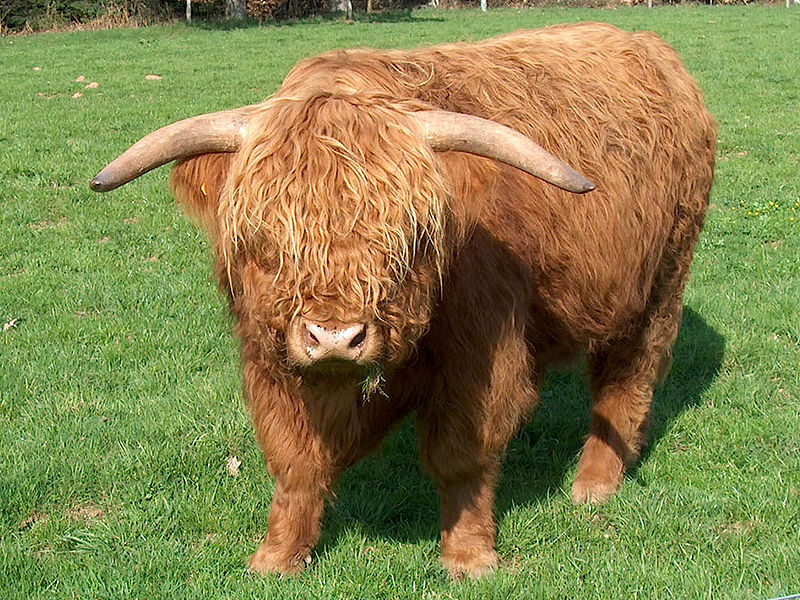
Highland cow, photo by Mahaba
and sizes:
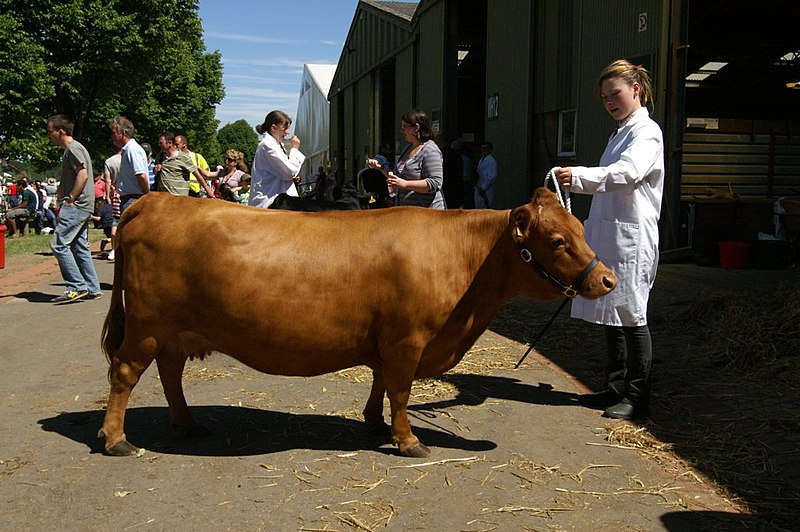
Dexter cow, photo by David Merrett
though they're all usually of the genus Bos.
But what if you live in a cattle-free zone?
Well, passenger planes have a cattle class (though the airlines usually call it economy) and of course cattle dogs are to be found all over the place.
What?
Oh, it's Australian.
What does it mean?
Catalogue, I'm afraid.
Yes, they are, aren't they: absolutely everywhere.
Spot the Frippet: cattle. This word comes from the Old Northern French catel, and is basically the same word as chattel, from the Latin capitāle, wealth.
Photo by Jamain
That beast is a Belted Galloway cow, but other cattle come in different shapes:
Polled Brahmin bull, photo by CSIRO
colours:
Highland cow, photo by Mahaba
and sizes:
Dexter cow, photo by David Merrett
though they're all usually of the genus Bos.
But what if you live in a cattle-free zone?
Well, passenger planes have a cattle class (though the airlines usually call it economy) and of course cattle dogs are to be found all over the place.
What?
Oh, it's Australian.
What does it mean?
Catalogue, I'm afraid.
Yes, they are, aren't they: absolutely everywhere.
Spot the Frippet: cattle. This word comes from the Old Northern French catel, and is basically the same word as chattel, from the Latin capitāle, wealth.
Sunday, 12 November 2017
Sunday Rest: mouthbrooder. Word Not To Use Today.
A mouthbrooder, despite appearances, isn't someone with a habitual enbittered pout, but a sort of fish (or, occasionally, frog) which carries its eggs and young around in its mouth.

Cyphotilapia frontosa. Photo by Matthew Miller. (Can you see the babies?)
Mind you, as you can see, that can often be the same thing.
Word To Use Today: pout. No one is sure where this word comes from, but the Danish word pude means pillow.
There are some species where the fathers take on the mouthbrooding, but it's usually the mothers.
Saturday, 11 November 2017
And death shall have no dominion by Dylan Thomas.
I haven't seen many remembrance poppies about this year. In fact, I haven't even had an opportunity to buy one.
I hope it isn't because of the idea that's being put about on social media that wearing a poppy implies an approval of, and support for, war. (It's hard to see how a symbol of the blood of soldiers can do that, but that's what people are saying).
Here's the beginning of a poem by Dylan Thomas. It was written in 1933, which we now know, sadly, was between-the-wars.
Does writing a poem about war show support for wars?
Well, what do you think?
And death shall have no dominion.
Dead men naked they shall be one
With the man in the wind and the west moon;
When their bones are picked clean and the clean bones gone,
They shall have star at elbow and foot;
Though they go mad they shall be sane,
Though they sink through the sea they shall rise again;
Though lovers be lost love shall not;
And death shall have no dominion.
The first and last lines come from St Paul's letter to the Romans.
The whole poem can be found HERE.

photo by Tony Hisgett
Word To Use Today: dominion. This word comes from the Latin dominium, ownership, from dominus, master.
I hope it isn't because of the idea that's being put about on social media that wearing a poppy implies an approval of, and support for, war. (It's hard to see how a symbol of the blood of soldiers can do that, but that's what people are saying).
Here's the beginning of a poem by Dylan Thomas. It was written in 1933, which we now know, sadly, was between-the-wars.
Does writing a poem about war show support for wars?
Well, what do you think?
And death shall have no dominion.
Dead men naked they shall be one
With the man in the wind and the west moon;
When their bones are picked clean and the clean bones gone,
They shall have star at elbow and foot;
Though they go mad they shall be sane,
Though they sink through the sea they shall rise again;
Though lovers be lost love shall not;
And death shall have no dominion.
The first and last lines come from St Paul's letter to the Romans.
The whole poem can be found HERE.
photo by Tony Hisgett
Word To Use Today: dominion. This word comes from the Latin dominium, ownership, from dominus, master.
Friday, 10 November 2017
Word To Use Today: dornick.
Most words, like our own dear queen, have fairly obvious relatives.
A cupboard, for instance, plainly started off being a rather different piece of furniture, and it's not difficult to guess how its meaning evolved.
Some words, however, drop in from Mars: or, in this case, Belgium, which is, after all, very much the same thing.
Dornick.
Can you guess what it is?
Even though a dornick is two quite separate things, almost certainly not.
The oldest dornick is a kind of heavy and very expensive damask cloth (damask is the sort of fabric that has patterns on it made by weaving in extra-shiny thread). Traditionally, dornick is used for curtains and vestments (especially the cloaks priests wear).
Something like this:

The other sort of dornick word you only find in the USA.
This sort of dornick is as different as possible from the first one, because it means a small stone, pebble, or occasionally, coin. There used to be an expression as hard as dornick to describe a tough man:

The two sorts of dornicks are all alone - they aren't even relations of each other.
So perhaps we should adopt them.
Word To Use Today: dornick. The cloth dornick is named after the Belgian town now called Tournai, where it was manufactured. The stone dornick probably comes from the Irish Gaelic dornōg, from dorn, which means hand.
A cupboard, for instance, plainly started off being a rather different piece of furniture, and it's not difficult to guess how its meaning evolved.
Some words, however, drop in from Mars: or, in this case, Belgium, which is, after all, very much the same thing.
Dornick.
Can you guess what it is?
Even though a dornick is two quite separate things, almost certainly not.
The oldest dornick is a kind of heavy and very expensive damask cloth (damask is the sort of fabric that has patterns on it made by weaving in extra-shiny thread). Traditionally, dornick is used for curtains and vestments (especially the cloaks priests wear).
Something like this:
The other sort of dornick word you only find in the USA.
This sort of dornick is as different as possible from the first one, because it means a small stone, pebble, or occasionally, coin. There used to be an expression as hard as dornick to describe a tough man:
The two sorts of dornicks are all alone - they aren't even relations of each other.
So perhaps we should adopt them.
Word To Use Today: dornick. The cloth dornick is named after the Belgian town now called Tournai, where it was manufactured. The stone dornick probably comes from the Irish Gaelic dornōg, from dorn, which means hand.
Thursday, 9 November 2017
Changing problems: a rant
Ah, the dear Académie Française! Always so passionate.
Its members (they call themselves Les immortels, or The Immortals, which seems a strange sort of thing to do to me: but then I'm English) have the responsibility of guarding the purity of the French language (to speakers of the proudly mongrel English language also a strange idea) and the poor things are under constant attack from...well, the rest of the world, basically. Anyone who speaks anything other than perfect French.
But now, what horror! the French language is under attack by its own government.
The civil service of President Macron is adopting gender-neutral forms. Now, these are certainly inclusive and respectful, but they are a) not standard French and b) the ones that have been chosen are very difficult to write on a computer.
The essential problem with French as it stands at the moment is that if you have a bunch of French people of both sexes (the official French language only recognises two sexes) then linguistically they're all treated as male. You might be describing a crowd of ninety nine women and one man, but you're supposed to call them your amis, which is the word for male friends (female friends are amies). In France, my family is anglais, even though three quarters of us are actually female and therefore anglaises.
So, in the name of equality (if not liberty and fraternity) a new way of describing mixed groups has been invented, the écriture
What you have to do is put a dots in to show you're writing about both sexes. A group of mixed friends becomes ami·e·s, for instance.
(You see what that mid-point dot has done to the formatting of this post? Tut!)
I'm sure the person behind this idea is perfectly well-meaning, but, look, I don't have a floating dot on my keyboard. French keyboards don't usually have this facility, either.
And, after all, if you must, why not write it ami.e.s?
The immortels - sorry, there are a few women among them, the immortel·le·s - are in despair, and talk of mortal danger to the language.
Well, it's their job to make a fuss about this sort of thing, so I suppose you can't blame them.
And, honestly, why on earth didn't the revolutionaries come up with some system you can type?
Word To Use Today: chairman? Postman? Actress? Or else some alternative your conscience deems appropriate.
Wednesday, 8 November 2017
Nuts and Bolts: nonce words.
A nonce word is one coined for a particular occasion.
For instance, if you ever needed to communicate an intense need for chocolate it would be possible to speak of suffering from chocodrawal symptoms.
If you needed to express your displeasure at someone else's infant - or, indeed, your own - getting into your private possessions or your conversation then perhaps toddlecreep would cover it.
The trouble with nonce words is, of course, that if they're actually any good then they'll be used again and again and soon stop being, well, nonce words, at all.
One other reason nonce words come into being is for use in language experiments.
So let's do one now: which of these creatures is a flooble?
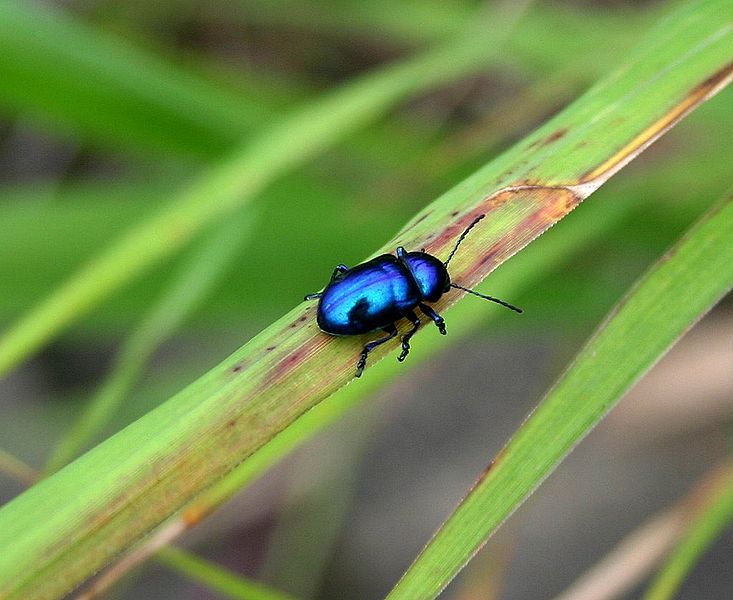
photo by Robert
or

photo by NIAID
?
Well, don't ask me: flooble is a nonce word. I just made it up.*
Words To Use Today: nonce word. This phrase comes from for the nonce, which is a mangling of the phrase for then anes, which in the 1100s meant for the once.
*But most people would probably say the first, all the same: rounded sounds tends to suggest a rounded body in most people's minds.
.
For instance, if you ever needed to communicate an intense need for chocolate it would be possible to speak of suffering from chocodrawal symptoms.
If you needed to express your displeasure at someone else's infant - or, indeed, your own - getting into your private possessions or your conversation then perhaps toddlecreep would cover it.
The trouble with nonce words is, of course, that if they're actually any good then they'll be used again and again and soon stop being, well, nonce words, at all.
One other reason nonce words come into being is for use in language experiments.
So let's do one now: which of these creatures is a flooble?
photo by Robert
or
photo by NIAID
?
Well, don't ask me: flooble is a nonce word. I just made it up.*
Words To Use Today: nonce word. This phrase comes from for the nonce, which is a mangling of the phrase for then anes, which in the 1100s meant for the once.
*But most people would probably say the first, all the same: rounded sounds tends to suggest a rounded body in most people's minds.
.
Subscribe to:
Posts (Atom)