This blog is for everyone who uses words.

The ordinary-sized words are for everyone, but the big ones are especially for children.


Sunday, 31 January 2016

Sunday Rest: telegony. Word Not To Use Today.


Telegony sounds like an ability to inflict pain from a distance. This is a real-life talent possessed by, for instance, Florence Foster Jenkins: 


but it isn't telegony.

Telegony is the idea that a woman's children are influenced genetically by all her previous lovers.

As far as I can make out the idea is completely nuts (though I suppose someone might be able to get an interesting bit of Sci Fi out of it).

In fact I think it's so nuts that, that, given an opportunity to spend time with a supporter of the idea or with Florence Foster Jenkins, I might even choose dear Florence, instead.

Word Not To Use Today: telegony. This word was made up in the 1800s from the Greek tele- which means far, and gonos, which means seed or procreation.


Saturday, 30 January 2016

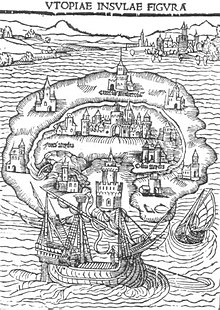
Saturday Rave: Utopia by Thomas More.

It's the five hundredth anniversary of the publication of Utopia.

I read Utopia (in English, not the original Latin) long ago. At the time the Holbein portraits of Thomas More and his family had made me rather fall in love with him, but I'm afraid reading Utopia put an end to that.

Utopia is...cold, emotionally, or so I thought at the time. I was dismayed by this society where the family is so little valued, and where everything is geared to the public good to such an extent that privacy is distrusted.

It was pretty much my idea of hell.

But then...More's island is Utopia, not Eutopia: it's Noplace, not Goodplace. And the book has jokes, too: More has fun with his banishment of unnecessary lawyers (More was a lawyer) and his opinion of rich people (More made some serious money in his time) as greedy, unscrupulous and ruthless.

More's Utopia, too, is constructed with care and great intelligence, right from the founding principle that 'wherever you have private property...then it is scarcely possible for a commonwealth to have justice and prosperity' to its religious tolerance (this from a man who later became passionate in his persecution of the unorthodox), to its obligatory work schedules, to its refusal to acknowledge symbols of wealth such as gold and jewellery, to its equality of the sexes (well, sort of), to its democracy.

What did More think he was about, writing such a book? 

Well, I now think it was an exercise in humility. The society in which he lived wasn't working (he was later responsible for introducing a system of state-sponsored care for the poor) and Utopia was an example of a completely different system that wasn't going to work either. I think his self-mockery - perhaps you might call it wisdom - is a terrifically important part of the book.

Sadly, oh so sadly, More discovered (though surely he already knew) that wisdom and philosophy are tools too slow and blunt for practical government. Whatever was the truth of the matter, he was soon embroiled too deep in politics to escape.

He was executed on 6th July 1535.


Isola di Utopia Moro.jpg
Illustration from the first edition.

Word To Use Today: Utopia. This word comes from the Greek ou- meaning not, and topos, which means place.

Friday, 29 January 2016

Word To Use Today: mulligatawny.

Mulligatawny is a spicy soup of Anglo-Indian origin.

It's an extremely satisfying word to say, mirroring as it does the stress-pattern of the much-loved refrain have a banana.

Mulligatawny comes in many variations, but basically if you fancy some mulligatawny soup then first make some vegetable soup (perhaps lentil and potato with a bit of turmeric in it), and then make a curry (traditionally a meat one), and then mix the two together, and serve.

Just right for a perishingly cold day - and, given its origin, presumably just what you need on a blazingly hot one, too.

Bon appetit!


Word To Use Today: mulligatawny. This word came to English in the 1700s from the Tamil milakutanni, from milaku, pepper, plus tanni, water.


Thursday, 28 January 2016

Fountain Pens: a rant.


Nevile Gwynne. the author of some well-selling books on grammar, has written a hilarious article in The Telegraph newspaper, in which he gives us some practical suggestions for improving our children's education.

As I agree with Mr Gwynne that knowing some grammar is a good thing, I expected to have considerable sympathy with his point of view.

I was rather startled, however, by Mr Gwynne's suggestion that the brighter primary school children should start learning Greek at eleven or twelve, particularly since in Britain children have left primary school before they've reached the age of twelve. Mr Gwynne's proposed ban on all computers, at home and at school, was also deeply surprising. 

Most bewildering of all, however, was his suggestion that science should not be taught until the age of fifteen, and even then only as a single subject, with Chemistry, Biology and Physics being allocated a term's study each.

Mr Gwynne follows, of course, in a long line of educationalists whose core belief is that there can be finer result of any educational system than themselves. We might smile fondly and move on, were it not for a truly egregious error in Mr Gwynne's article.

The first item on Mr Gwynne's list of subjects to be studied at primary school children is this:

'Handwriting with fountain pens, correctly held'

Fountain pens? 

As I'm sure you're wondering yourselves, how on earth are the poor children supposed to learn to write a fluent cuneiform using a fountain pen?

Word To Use Today: arrogance. This word comes from the Latin arrogāre, to claim as one's own.


Wednesday, 27 January 2016

Nuts and Bolts: long metre.

But, you may say, a long metre is an impossibility: if it's longer than a hundred centimetres then it's a metre and a bit.

Of course in most worlds you'd be quite right, but it depends what you're measuring, and with long metre what you're measuring is hymns.

Now, the length of a hymn is a jolly useful thing to know if the bishop, for instance, isn't wearing the heels for sprinting; but as it happens long metre isn't to do with the length of the hymn from beginning to end, but with the length and arrangement of the lines.

An important consideration with hymns, you see, is not only how long they take to sing, but the tunes to which you can sing them. For this reason hymn metre is considered rather differently from poetic metre.

Long metre (or LM to the hipper sort of organist) tells you that each verse has four lines, that each line has eight syllables with alternate weak and strong stresses starting with a weak one (like the word away), and that the second and fourth lines rhyme. 

The first and third lines might rhyme as well, but that's optional.

Armed with this information, you can sing, if you so wish, the words of O Come O Come Emmanuel to the tune of On Jordan's Bank the Baptist's Cry. 

Or, alternatively, Hernando's Hideaway.

Thing To Sing Today: something in long metre. Or something not in long metre. The word metre comes from the Greek metron, which means measure.


Tuesday, 26 January 2016

Thing To Do Today: mull.

It's jolly cold and crispy in my garret as I write this. I'm wearing woollen mittens, a scarf, and I'm wrapped in a blanket.

How artistic is that?

From time to time, to prevent pneumonia setting in, I make myself a hot drink, and when I can't face any more tea then I might make myself some mulled...well, apple juice, probably, as alcohol, oh-so-sadly, makes me ill.

As long as you put enough cinnamon in it, it still has quite a kick.

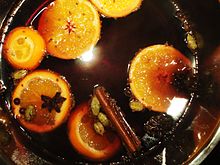
You can simmer any sort of spice or fruit in your drink to mull it. Some people add sugar, too, but a sliced whole orange, some cloves, and a cinnamon stick simmered in your wine-or-whatever for five minutes or so should do the trick.


(This mulled wine also seems to have peppercorns, cardamom pods and star anise in it.)

Of course you may prefer to do the other sort of mulling, which is thinking over a problem without expecting to coming up with a quick solution. In fact, when you mull over something your aim might well be to decide between the lesser of two evils, or the greater of two goods. It's a gentle, careful sort of thinking, looking in detail at every side of the argument. If you do make a decision, it'll be an unhurried one.

And, yes, mulling things over has fallen utterly and completely out of fashion, hasn't it.

Pity.

Thing To Do Today: mull something. The word meaning to mix spices with a hot drink arrived in the 1600s, though no one's sure from where. The word meaning to think something over probably comes, most unfairly, from muddle.


Monday, 25 January 2016

Spot the Frippet: mull.

Here's a four-letter word for you to mull over (though, actually, let's save mulling things over for tomorrow).

So what is a mull, anyway?

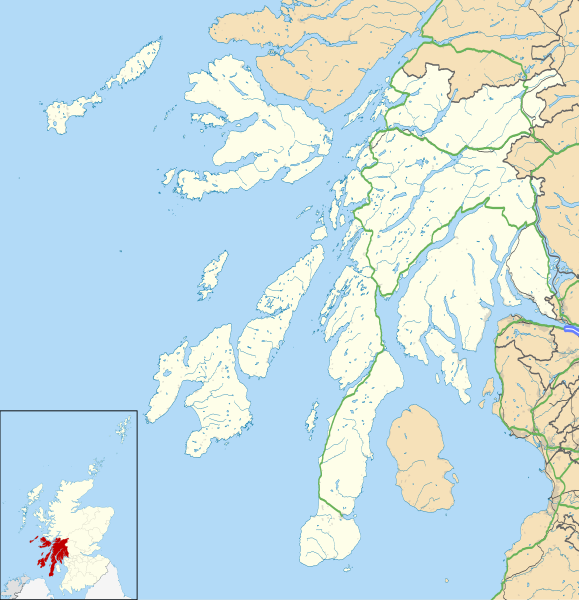
The most famous mull, because of Paul McCartney and Denny Laine etc, is probably the Mull of Kintyre. 

File:Argyll and Bute UK location map.svg

The Mull of Kintyre is the promontory in the bottom middle of the picture. It's in Scotland, in case you don't recognise the map.

Now, there's no chance for people like me who live miles away from the sea for spotting the promontory sort of a mull, but luckily there are other mulls to spot.

One's a soft muslin cloth. It's the sort of thing used for cooking, perhaps, or (in this household) for covering a moth trap to ensure the tiniest moths don't escape from it before they can be identified. 

Or, if you're doing infrared spectroscopy (and aren't we all?) then you may well prepare a solid sample for analysis by crushing it up with oil to form a thick substance called a mull.

But the easiest mull to spot is the layer of top soil that forms wherever there's vegetation, but the soil isn't waterlogged enough to turn the ground sour.

It makes you feel quite differently about soil once you know you can call it mull, doesn't it.

Spot the frippet: mull. The fabric used to be called mulmull, from the Hindi malmal; the topsoil comes from the Danish muld; and the promontory is related to the Gaelic maol. 

I'm afraid none of the infrared spectroscopy people are saying from where their sort of mull came,