This blog is for everyone who uses words.

The ordinary-sized words are for everyone, but the big ones are especially for children.


Saturday, 6 February 2016

Saturday Rave: To Winter by William Blake.


There are many wonderful things about William Blake's poetry, but one of the best is that most of the time no one's sure what they're about.

This one, To Winter, seems pretty straightforward to me: it's about the weather. That hasn't stopped a lot of words being written about To Winter, though, especially as Blake later constructed a whole mythology, of which this poem was perhaps part of the beginning.

To Winter is one of a set of four poems (I'll leave you to guess the subject of the others). It's magnificently mighty, mesmerising stuff.

O winter! bar thine adamantine doors:
The north is thine; there hast thou built thy dark
Deep-founded habitation. Shake not thy roofs
Nor bend thy pillars with thine iron car*.

He hears me not, but o'er the yawning deep
Rides heavy: his storms are unchained, sheathed
In ribbed steel; I dare not lift mine eyes;
For he hath rear'd his sceptre o'er the world.

Lo! now the direful monster, whose skin clings
To his strong bones, strides o'er the groaning rocks:
He withers all in silence, and in his hand
Unclothes the earth, and freezes up frail life.

He takes his seat upon the cliffs, the mariner
Cries in vain. Poor little wretch! that deal'st
With storms, till heaven smiles, and the monster
Is driven yelling to his caves beneath Mount Hecla**.


January 2015 nor'easter 27 Jan 2015 Suomi NPP.png
Satellite image of a winter storm.

Word To Use Today: adamantine. Adamant is an Old English word and comes from the Greek daman, to tame or conquer. In this case the a- bit at the beginning means not.

*Car is a word for chariot quite often used in poetry of this sort of age, ie, long before cars. 

**Mount Hecla, a volcano in Iceland, was thought to be the gate to Hell. An odd location for Winter to dwell: I would have thought: uncomfortably hot. 


Hmm...no wonder he was so cross.

Friday, 5 February 2016

Word To Use Today: wharf.


File:Quebec-wharf.jpg
Quebec Wharf, late 1800s.

I'm trying to think of an intellectually coherent reason to recommend this word, but I'm afraid I mostly love it because it sounds like the laugh of an extremely old colonel.

Wharf!

The word wharf has been extended into some interesting forms: there's wharfage, which can mean either a fee for mooring a ship, or the place where you moor them; wharfinger, the owner or manager of a wharf; and wharf rat, which can be either a brown rat, or a person who hangs about wharves, probably for no honest purpose. 

The word wharf is, though, at its most irresistible entirely on its own.

Wharf! Wharf!

Word To Use Today: wharf. This word comes from the Old English hwearf, heap.


Thursday, 4 February 2016

Unconscious influence: a rant.

David Engleman's documentary on the brain quoted research showing that if you're holding a hot drink your memories of your relationship with your mother will be, on average, warmer than if you are holding a cold one.

Another study showed that if you are sitting next to a bottle of hand sanitiser then your political opinions will move to the right.

Will we be seeing bottles of hand sanitiser in every poling booth in every election? Or will we be seeing a campaign for a law to ban them?


moth names switching: a rant

It's not very long since I wrote about the difficulty of naming biological specimens - and it is difficult - but sometimes I run out of patience.

In Britain, in about 1939 the scientific species name of the moth Green Silver-lines, prasinana, was given to the Scarce Silver-lines, previously named bicolorana.

File:Green Silver-lines (Pseudoips prasinana).jpg
Photo of Green Silver-lines by Ben Sale

Why?

I've no idea why, quite frankly, but then why doesn't matter: it was still an idiotic thing to do.

File:(2421) Scarce Silver-lines (Bena bicolorana) (7630241904).jpg
Photo of Scarce Silver-lines also by Ben Sale (he's terrific, is Ben).

It means that to know which record belongs to which moth you have to know the date of the record, as well as allow for some delay in getting news of the decision to the mothing community.

Perhaps they sent telegrams...


(Telegram messenger bike)

As if that wasn't confusing and nuts enough, then in about 1990 the name prasinana was swapped back to the Green Silver-lines again.

Of course, if you know nothing of this moth-naming saga, you're bound to assume that all records of all moths called prasinana are for the same species.

In fact, it's really enough to make one question the use of the word scientific.

Word To Use Today: nuts. The word meaning bonkers is the same word as the one that means edible nut (it also means head). It comes from the Old English hnutu.

PS Just in case you're wondering (you never know) the Green Silver-lines was called fagana between 1939 and 1990.


Wednesday, 3 February 2016

Nuts and Bolts: the articulate grunt..

Dr Marc Pell, of McGill University's School of Communication Sciences and Disorders, has done an elegant study into grunting.

Actually, it wasn't only grunting he investigated, but various other non-verbal sounds people use to communicate, too.

The study is called Growls Laughs and Sobs are better than words at Conveying Emotion, and the result of the study is pretty much as promised in the title.

Apparently people take notice of non-verbal vocalisations more quickly than they do words: of the three emotions studied, which were anger, happiness and sorrow, people noticed happiness most quickly, though anger stayed in the mind for longest.

How did Dr Pell and his colleagues do the study? Well, they employed everything from brain scanners to the delicious and deliberately nonsensical phrase He placktered the tozz. 

According to Dr Pell, emotional vocalisations are recognised by a particularly long-evolved part of the brain. This turns out to makes recognition quicker (we've got it down to just one tenth of a second).

This is certainly fascinating, but it's also proof of something I think we really knew. I mean, when the car in front suddenly starts reversing towards us our immediate impulse isn't to say to the driver oh look, darling, I think that car's about to smash into us, is it?

It's really more of an arrrrgggghhh!

Thing To Notice Yourself Using Today: a non-verbal vocalisation. I wonder how many we make for every word spoken?


Tuesday, 2 February 2016

Thing Not To Do Today: any blithering.

How long can you go on using a word without knowing what it means?

Well, the oldest person in recent times, Jeanne Calment, lived to be one hundred and twenty two years old, so that's probably about the limit - unless you go Biblical, when it goes up into the high nine hundreds.

I must be entering my sixth decade of ignorance about blithering. All I've ever known about blithering is that idiots do it. You blithering idiot! a teacher would say to some unfortunate forgetter of homework, or thrower of paper aeroplanes, or dropper of ink-bottles.

What meaning does blithering add to idiot? 

Well, it turns out that my teachers didn't know what blithering means, either, because blithering is jabbering or talking foolishly, and the blithering idiots in their classes were seldom talking. 

(Blithering can also simply mean foolish, but obviously an idiot who isn't foolish isn't an idiot.)

Do I blame my teachers for using the word wrongly? Not at all. They had a jolly difficult job, and without the opportunity to say you blithering idiot in tones of utter contempt I'm not sure they'd have had an entirely adequate reason for coming in to school.

File:Just William.jpg

Thing Not To Do Today: any blithering. This word is a variant of blather, which comes from the Old Norse blathr, nonsense.


Monday, 1 February 2016

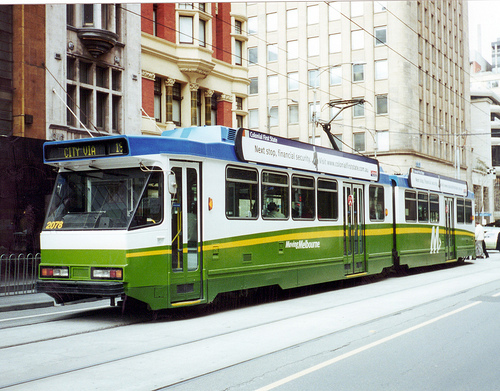
Spot the Frippet: tram.

A Streetcar named Desire is a brilliant name for a play, and A Tram called Desire isn't - but still, for me here in England an electrically-driven vehicle that travels along tracks let into the road is, and probably always will be, a tram.*


Photo by zed.fitzhume

A small trolley on rails used in a mine is a tram, too.

But how can we spot a tram if we neither live in a tram-crossed city nor have any intention of going down a mine? 

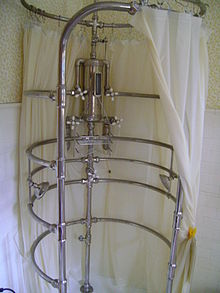
Well, we're still all right as long as we plan to take a shower, because a tram is a fine adjustment on a piece of machinery - and you know how long it takes to get the shower just right. 

(What you're doing when you're fiddling about with the controls is tramming it.)


You may find yourself doing the same sort of thing with an office chair, a rear-view mirror, or the gas-jets under a pressure cooker.

Lastly, if you can find a piece of silk fabric, the threads that run across the fabric - the weft threads, that is the ones that do the actual weaving in-and-out - are called tram.

Personally, I find that last piece of information vastly satisfying.

Spot the Frippet: tram. The fabric word comes from the French trame, which is related to the Latin trāns, across and trāmes, footpath. The vehicle word is, interestingly, nothing to do with footpaths at all: that word probably comes from the Low German traam, beam. The fine-adjustment word probably comes from trammel, from the Old French tramail, three-mesh net.

*A Tram Called Sam is a good title, but that would be a rather different sort of a play.